Guide
Electric Dirt Bike Top Speeds Compared: Every Model, Real Numbers
How fast every Sur-Ron and Talaria we sell actually goes, why peak power is not the number that decides it, and which machine to buy for the speed you actually need.
Updated 2026-08-13
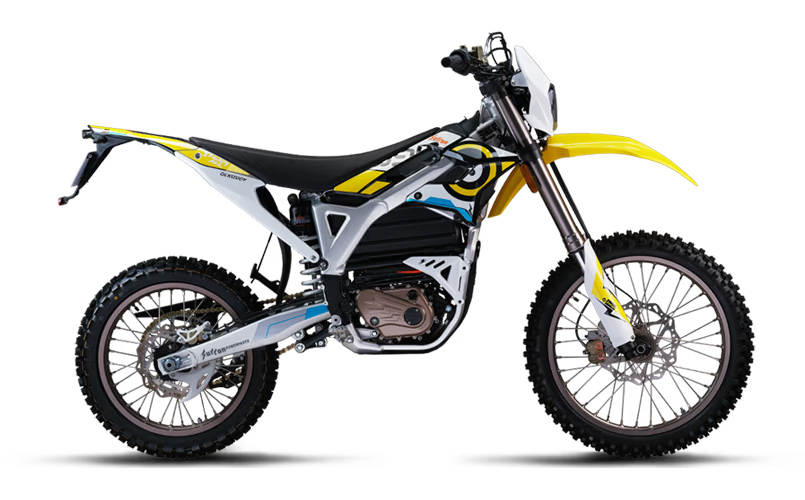
“How fast does it go” is the most-asked question in this category and the worst answered. Search it and you get figures from three model years ago, numbers quoted for the wrong variant, and a lot of confident guessing.
Here is every machine we sell, with the manufacturer figure, in order.
Every model by top speed
| Model | Brand | Top speed | Peak power | Continuous | Weight | Price |
|---|---|---|---|---|---|---|
| Sur-Ron Storm Bee | Sur-Ron | 68 mph | 22.5 kW | 10 kW | 280 lb | $7,500 |
| Talaria Komodo | Talaria | 65 mph | 32 kW | 8.6 kW | 216 lb | $5,999 |
| Talaria Sting MX5 Pro | Talaria | 60 mph | 13.4 kW | 5.5 kW | 163 lb | $4,990 |
| Sur-Ron Ultra Bee | Sur-Ron | 56 mph | 12.5 kW | 6 kW | 187 lb | $5,000 |
| Sur-Ron Light Bee 2 X NA | Sur-Ron | 56 mph | 24 kW | — | 143 lb | $5,950 |
| Talaria Sting R MX4 | Talaria | 55 mph | 8 kW | 4 kW | 150 lb | $4,295 |
| Sur-Ron Light Bee X NA 2026 | Sur-Ron | 50 mph | 10 kW | — | 130 lb | $4,390 |
| Sur-Ron Light Bee X | Sur-Ron | 47 mph | 8 kW | 4 kW | 126 lb | $4,000 |
| Talaria X3 MX | Talaria | 47 mph | 5 kW | 2.5 kW | 121 lb | $3,295 |
| Talaria X3 Pro | Talaria | 47 mph | 5 kW | — | 117 lb | $3,595 |
| Talaria Sting MX3 (discontinued) | Talaria | 43 mph | 6 kW | 3 kW | 139 lb | $3,795 |
| Sur-Ron Hyper Bee | Sur-Ron | 40 mph | 8 kW | — | 86 lb | $3,000 |
| Talaria X3 Mini | Talaria | 40 mph | 4.2 kW | 2.5 kW | 115 lb | $2,999 |
| Talaria JR-16 | Talaria | 10 mph | 0.72 kW | 0.36 kW | 33 lb | $1,397 |
| Talaria JR-12 | Talaria | 10 mph | 0.36 kW | 0.18 kW | 24 lb | $1,015 |
Top speed by model, in the words people search
Quick answers, because these get searched one model at a time:
- Sur-Ron top speed ranges from 40 mph on the Hyper Bee to 68 mph on the Storm Bee.
- Sur-Ron Light Bee top speed is 47 mph; the Light Bee X NA 2026 does 50 mph.
- Sur-Ron Ultra Bee top speed is 56 mph.
- Talaria X3 top speed is 47 mph, for both the X3 MX and the X3 Pro.
- Talaria MX3 top speed is 43 mph, Talaria MX4 top speed 55 mph and Talaria MX5 top speed 60 mph.
- Talaria XXX top speed is 47 mph — the xXx is the X3 under its earlier name, so the figures are the same machine’s.
- Talaria Komodo top speed is 65 mph.
Peak power does not decide top speed
Look at the top two rows. The Komodo makes 32 kW and reaches 65 mph. The Storm Bee makes 22.5 kW and reaches 68 mph. The less powerful bike is faster.
That is not a misprint, and it is the single most useful thing on this page. Top speed is set by gearing, weight, aerodynamics and how long the motor can hold output — not by the biggest number on the spec sheet.
Two more examples from the same table:
- The Light Bee 2 X NA makes 24 kW and tops out at 56 mph — the same as the Ultra Bee’s 12.5 kW. The Light Bee 2 X uses its power for acceleration in a 143 lb chassis rather than for outright pace.
- The Hyper Bee makes 8 kW, identical to the Light Bee X, but tops out at 40 mph against 47 mph. Different gearing, different purpose.
Continuous output is the honest number
Peak power is a burst figure. It is what the controller will deliver for a few seconds before heat forces it back.
Continuous output is what you are actually riding on a long climb, in deep sand, or anywhere you hold the throttle open:
- Storm Bee: 10 kW continuous behind 22.5 kW peak
- Komodo: 8.6 kW behind 32 kW
- Ultra Bee: 6 kW behind 12.5 kW
- Sting MX5 Pro: 5.5 kW behind 13.4 kW
- Light Bee X: 4 kW behind 8 kW
- X3 MX: 2.5 kW behind 5 kW
The Storm Bee’s advantage over the Komodo is clearer here than anywhere: it holds more power for longer, which is exactly what a motocross bike needs and what a liquid-cooled motor is for.
What the claimed figure assumes
Every number above is a manufacturer figure measured in favourable conditions: flat, firm ground, an average-weight rider, a full battery, no wind.
Expect less when any of that changes:
- Rider weight. Most of these carry a 220 lb payload rating. Heavier riders see lower top speeds and shorter range.
- Gradient. Sustained climbing pulls you back to continuous output.
- Surface. Sand and loose ground cost more than most people expect.
- Battery state. Voltage sags as the pack empties; the last 20% is slower.
- Cold. Lithium temporarily loses capacity and delivery in the cold.
“Without the limiter” — the honest answer
This search comes up constantly, usually attached to the X3.
On most of these machines the top speed is a product of motor output and gearing, not an artificial cap sitting between you and another 15 mph. There are ride modes, and there are controller settings, but the bikes are not secretly much faster machines being held back.
What actually happens when people chase speed:
- Sprocket changes trade acceleration and climbing torque for a few mph. You gain top end and lose the tractability that made the bike good.
- Controller modifications push more current through a system not specified for it. Heat is the enemy, and thermal derating means you often end up slower over a full ride.
- All of it ends your warranty.
If you want more than your bike does, buy a bike that does more. The step from a 47 mph X3 MX to a 55 mph Sting R MX4 is $1,000, and the MX4 is engineered for it — cooling, controller, brakes and chassis all specified to match.
How much speed do you actually need?
Honest guidance, from people who ride these.
10 mph — JR-12 and JR-16. Correct for a child on grass, and fast enough that they will still fall off. Do not wish for more.
40–43 mph — Hyper Bee, X3 Mini, Sting MX3 (discontinued). Plenty for tight woods and technical trail, where you rarely exceed 25 mph anyway.
47–50 mph — Light Bee X, X3 MX, X3 Pro. The sweet spot for most adult trail riders. Fast enough to be entertaining on fire roads, manageable enough to learn on.
55–60 mph — Sting R MX4, Ultra Bee, Sting MX5 Pro. Open terrain, desert, fast fire road. At this point you want the suspension that comes with it.
65–68 mph — Komodo, Storm Bee. Genuinely quick machines that demand a competent rider and real protective gear.
Most riders overbuy on speed and underbuy on suspension and seat height. On a trail you will spend most of your day between 15 and 35 mph, and what makes that enjoyable is torque, travel and a bike you can hold up at a stop.
Speed does not change the law
Worth stating plainly: none of these are street legal in stock form in most US jurisdictions, and that is true of the 40 mph machines as much as the 68 mph ones. They are electric off-road motorcycles for private land and designated OHV areas.
See electric dirt bike laws before you buy.
Compare any two, side by side
Every pairing in the table above has a full head-to-head with specs, a verdict and pricing — see all comparisons, or start with Sur-Ron vs Talaria.
Not sure which speed band suits you? Tell us your height, weight, experience and terrain and we will tell you honestly — including when the slower bike is the better buy. Get in touch or see what is in stock.
Frequently asked
- How fast does a Sur-Ron go?
- It depends entirely on the model. The Hyper Bee tops out at 40 mph, the Light Bee X at 47 mph, the Light Bee X NA 2026 at 50 mph, the Ultra Bee at 56 mph and the Storm Bee at 68 mph. The Light Bee 2 X NA reaches 56 mph. Anyone quoting a single figure for "a Sur-Ron" is guessing.
- What is the fastest electric dirt bike you sell?
- The Sur-Ron Storm Bee at 68 mph, from a liquid-cooled 22.5 kW motor. The Talaria Komodo is next at 65 mph despite making more peak power — 32 kW — which is a good illustration of why peak output does not decide top speed.
- How fast does a Talaria X3 go?
- 47 mph, for both the X3 MX and the X3 Pro. That is a function of the 5 kW motor and the gearing rather than a software limiter waiting to be unlocked, which is why chasing more speed on an X3 rarely works out.
- Does more power always mean more speed?
- No, and this range proves it. The Talaria Komodo makes 32 kW and reaches 65 mph; the Sur-Ron Storm Bee makes 22.5 kW and reaches 68 mph. Gearing, weight, aerodynamics and how long the motor can hold output all matter as much as the peak figure.
- Can I make my electric dirt bike faster?
- Sprocket changes trade acceleration and climbing torque for a few mph at the top. Controller modifications push current through hardware that was not specified for it, which usually ends in thermal derating — slower on a long ride, not faster — and always ends your warranty. If you want more speed, buy a model that comes with it.
- Do these speeds mean they are street legal?
- No. Top speed has nothing to do with legality here. These are electric off-road motorcycles and are not street legal in stock form in most US jurisdictions, whether they do 40 mph or 68 mph.
Bikes mentioned
-
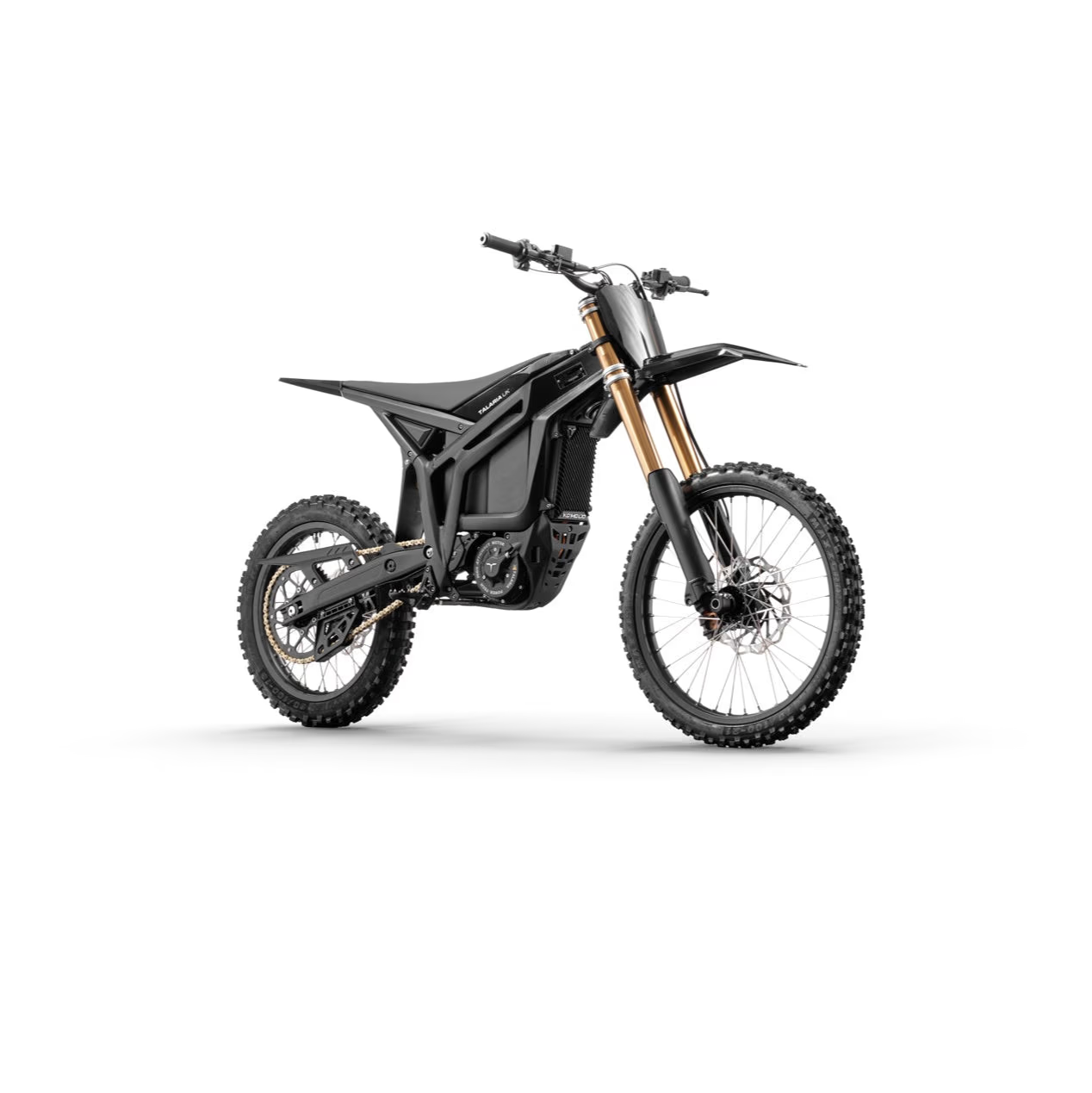 Talaria Komodo 97.2V, 32 kW peak, 754 N·m. Full-size 21/18.
 -
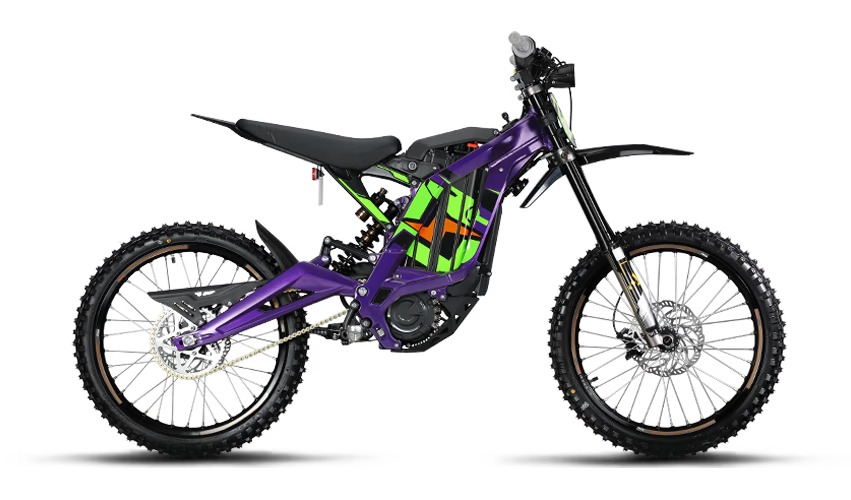 Sur-Ron Light Bee X The bike that defined the category. 8 kW peak, 60V 40Ah.
 -
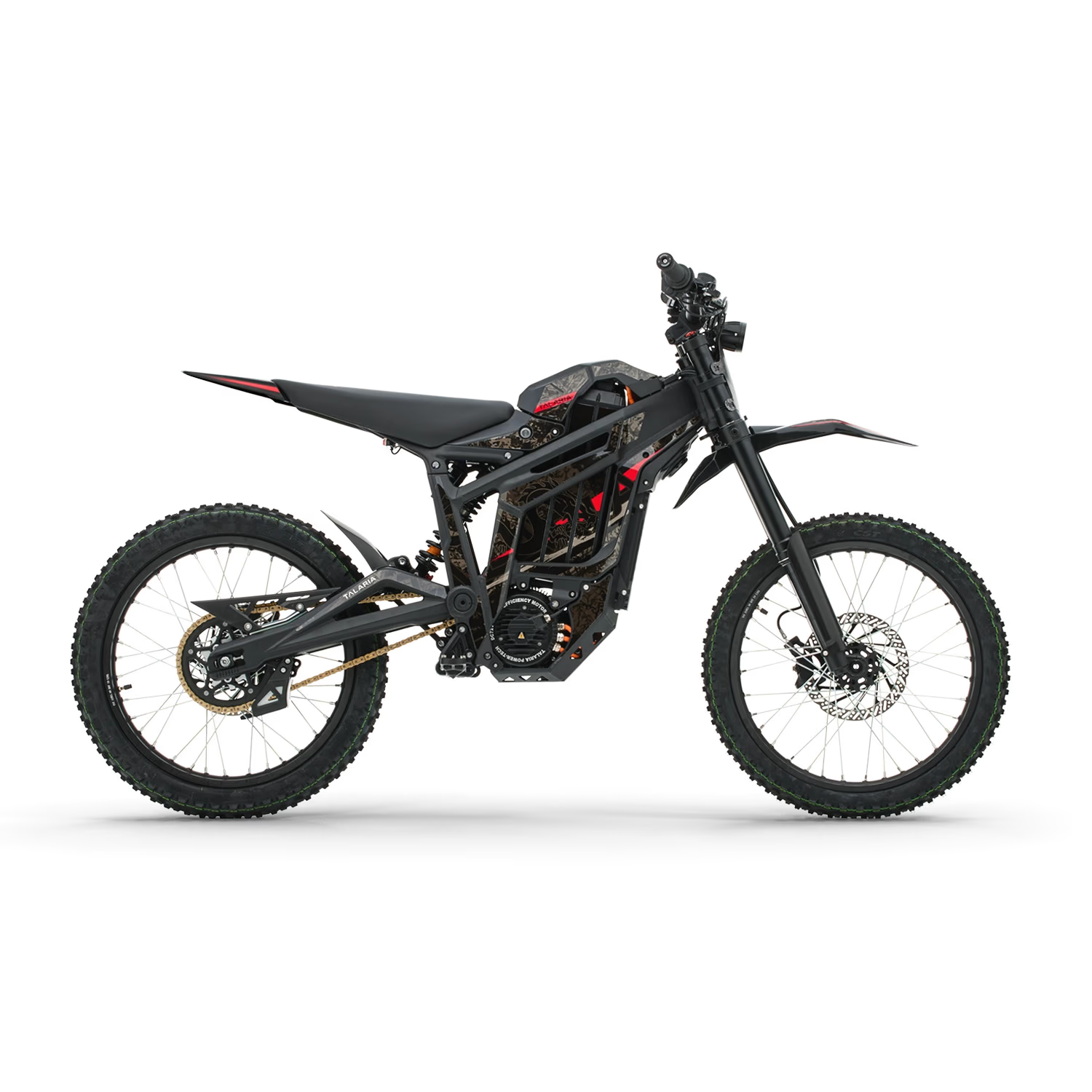 Talaria Sting MX5 Pro 72V, 13.4 kW peak unrestricted, Samsung 21700 cells.
 - Sur-Ron Storm Bee Liquid-cooled, 22.5 kW peak, 104V. Full-size motocross.
-
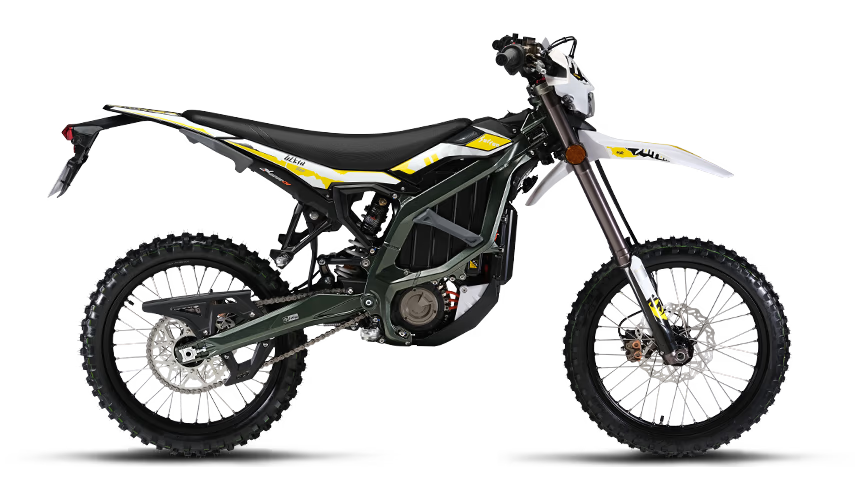 Sur-Ron Ultra Bee Full-size chassis, 74V 55Ah, 440 N·m at the wheel.