Guide
Sur-Ron vs Talaria: Which Should You Buy in 2026?
An honest, spec-by-spec comparison of the two brands we carry — power, range, weight, price and parts support — and which exact model suits which rider.
Updated 2026-08-12
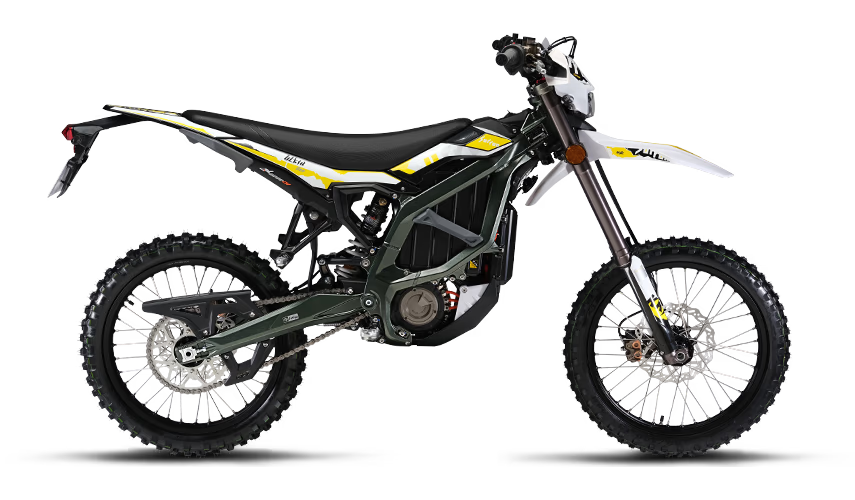
If you have spent time researching electric dirt bikes you have hit the same wall everyone hits: two brands dominate the conversation, and almost nobody will tell you which model they are actually talking about.
That is the whole game. “Sur-Ron vs Talaria” is close to meaningless at brand level. A Storm Bee and a Hyper Bee share a badge and nothing else — 22.5 kW against 8 kW, 280 lb against 86 lb. The same spread exists across Talaria’s range.
We sell both. We stock both, ship both, warranty both and service both, so we have no reason to push you toward a badge — only toward the right machine.
The short answer
Buy a Sur-Ron if you want the deepest parts and aftermarket support in the category, the strongest resale, and a platform proven over more model years than anything else here.
Buy a Talaria if you want more specification per dollar at the top of the range, and a chassis that generally feels more like a conventional dirt bike out of the crate.
Buy neither yet if you have not confirmed where you are legally allowed to ride. That matters more than any spec below.
Where Sur-Ron leads
Parts support. This is the big one. The Light Bee has been in production longer than anything else in the category and the aftermarket around it is enormous. If something breaks, you can get the part — often in several versions at several price points. That is a financial argument as much as a convenience one.
Resale. Sur-Ron holds value well, largely for the same reason.
Suspension and chassis at the top end. The Ultra Bee runs 9.4 in of travel and the Storm Bee 11.4 in on a 21 in front wheel. Both feel like finished machines rather than scaled-up bicycles.
Where Talaria leads
Specification per dollar, at the top of the range. The Sting MX5 Pro is $4,990 against $5,000 for a base Ultra Bee, and beats it on peak power (13.4 kW vs 12.5), torque (500 N·m vs 440) and top speed (60 mph vs 56) — 24 lb lighter, on a lower seat.
Accessible seat heights. The X3 MX sits at 31.9 in and the X3 Pro at 31.7 in, the lowest full-size seats we sell. That opens the category to riders the taller machines simply exclude.
Range at the entry end. The X3 MX claims 62 miles, matching the Ultra Bee from a pack holding roughly 40% less energy — because 5 kW of draw is far gentler on a battery than 12.5 kW.
Head to head: the full range
| Model | Brand | Price | Peak | Torque | Battery | Top speed | Range | Weight | Seat |
|---|---|---|---|---|---|---|---|---|---|
| X3 MX | Talaria | $3,295 | 5 kW | 233 N·m | 60V 40Ah fixed | 47 mph | 62 mi | 121 lb | 31.9 in |
| X3 Pro | Talaria | $3,595 | 5 kW | — | 60V 40Ah fixed | 47 mph | 50 mi | 117 lb | 31.7 in |
| Sting MX3 (discontinued) | Talaria | $3,795 | 6 kW | 284 N·m | 60V 38.4Ah removable | 43 mph | 43 mi | 139 lb | 34.3 in |
| Light Bee X | Sur-Ron | $4,000 | 8 kW | 266 N·m | 60V 40Ah removable | 47 mph | 47 mi | 126 lb | 32.7 in |
| Sting R MX4 | Talaria | $4,295 | 8 kW | 376 N·m | 60V 45Ah removable | 55 mph | 62 mi | 150 lb | 32.7 in |
| Sting MX5 Pro | Talaria | $4,990 | 13.4 kW | 500 N·m | 72V 40Ah removable | 60 mph | 52 mi | 163 lb | 33.1 in |
| Ultra Bee | Sur-Ron | $5,000 | 12.5 kW | 440 N·m | 74V 55Ah removable | 56 mph | 62 mi | 187 lb | 35.8 in |
| Komodo | Talaria | $5,999 | 32 kW | 754 N·m | 97.2V 45Ah fixed | 65 mph | 71 mi | 216 lb | 35.8 in |
| Storm Bee | Sur-Ron | $7,500 | 22.5 kW | 520 N·m | 104V 55Ah removable | 68 mph | 75 mi | 280 lb | 37.0 in |
Two things jump out. The brands do not sort cleanly — the most powerful machine here is a Talaria, the fastest and longest-range is a Sur-Ron, the lightest is a Talaria. And peak kW is doing a lot of work: the Ultra Bee runs 6 kW continuous behind its 12.5 kW peak, the Storm Bee 10 kW behind 22.5. On a long climb, continuous is what you are actually riding.
The comparisons that actually come up
Light Bee X vs X3 MX
The most common cross-shop, and closest on paper: identical 47 mph, both on 60V 40Ah packs, within 5 lb of each other.
The X3 MX is friendlier — 5 kW against 8 kW, a lower seat, and 15 more miles of claimed range. For a first bike, a shorter rider, or a teenager stepping up, it is the more forgiving machine.
The Light Bee X is the better long-term proposition: more power, a removable battery, and the deepest parts support of anything here.
Ultra Bee vs Sting MX5 Pro
The real fight, and closer than most buyers expect — $5,000 against $4,990.
The MX5 Pro brings more peak power, more torque and a higher top speed, 24 lb lighter with a lower seat, on Samsung 50S cells. The Ultra Bee answers with 10 more miles of range, more suspension travel, and Sur-Ron’s parts support.
Over about 5’10” on open terrain, Ultra Bee. Tighter trails, shorter rider, or maximum spec per dollar, MX5 Pro. Neither is a mistake.
Storm Bee vs Komodo
Different tools. The Storm Bee is a full-size electric motocross bike — 10 kW continuous, 11.4 in of travel, 21 in front. The Komodo counters with 32 kW and 754 N·m at 216 lb, 64 lb lighter, with a 353 lb payload rating.
Storm Bee for motocross and sustained high speed. Komodo for technical terrain and heavier riders.
The spec that decides ownership: battery format
More real-world satisfaction comes down to battery format than to peak power.
Removable — Light Bee X, Ultra Bee, Storm Bee, Sting MX3, Sting R MX4, Sting MX5 Pro — lets you charge indoors, store the pack properly over winter, and run a spare for a double ride day. If you live in an apartment or park outside, this is close to non-negotiable.
Fixed — X3 MX, X3 Pro, Komodo — means the bike goes where the charger is.
Which model, for which rider
| Rider | Our suggestion | Why |
|---|---|---|
| First adult bike | Talaria X3 MX | 5 kW, 121 lb, 31.9 in — the most forgiving full-size machine |
| Shorter rider | Talaria X3 Pro | The lowest full-size seat we sell at 31.7 in |
| Junior rider | Talaria JR-12/JR-16, X3 Mini or Sur-Ron Hyper Bee | Sized by height and inseam — see the junior range |
| Plans to modify heavily | Sur-Ron Light Bee X | Nothing else has the same parts depth |
| Maximum spec per dollar | Talaria Sting MX5 Pro | Beats a base Ultra Bee on power, torque and speed for $10 less |
| Tall rider, open terrain | Sur-Ron Ultra Bee | Full-size chassis, 9.4 in travel, 62 mi |
| Motocross and jumps | Sur-Ron Storm Bee | 10 kW continuous, 11.4 in travel |
| Heavier rider, max torque | Talaria Komodo | 754 N·m and a 353 lb payload |
Parts and the five-year view
A dirt bike is a consumable-heavy machine — tyres, pads, sprockets, chains, levers. Sur-Ron’s advantage here is real and it is the strongest argument for the brand: broad parts availability keeps long-term ownership cost down and resale up. See the Sur-Ron parts catalogue and the Talaria equivalent.
Talaria support is solid on current models and improving, but narrower and more tightly model-specific. Check fitment before buying an upgrade — our fitment checker does it by model.
Legality: read this before you buy either
Neither brand is street legal in stock form in most US jurisdictions. These are high-powered electric off-road motorcycles, not bicycles, and no amount of “e-bike” branding changes that.
California riders: SB 586 created an “eMoto” vehicle category effective 1 January 2026. It establishes a classification — it does not confer street legality. Riding designated OHV areas still requires DMV off-highway (green sticker) registration and a compliant helmet.
Full detail in our electric dirt bike laws guide and the California guide.
The honest summary
If you value parts availability and resale, buy the Sur-Ron. If you value specification per dollar, buy the Talaria. Both are good; they optimise for different things, and the right answer depends on your height, your terrain and how long you intend to keep it.
Tell us how you ride and what your budget is and we will tell you which one we would buy — including when that is the cheaper one. Get in touch, or see what is in stock.
Frequently asked
- Is Sur-Ron or Talaria faster?
- It depends on the model, not the badge. The fastest Sur-Ron we stock is the Storm Bee at 68 mph; the fastest Talaria is the Komodo at 65 mph. At the popular end the Talaria Sting MX5 Pro (60 mph, 13.4 kW) is meaningfully faster than the Sur-Ron Light Bee X (47 mph, 8 kW), while the Sur-Ron Ultra Bee (56 mph) beats the Talaria X3 MX (47 mph). Compare model to model.
- Which brand has better parts availability?
- Sur-Ron, clearly. The Light Bee has been in production longest and has the deepest aftermarket ecosystem of any machine in the category. Talaria parts support has improved a great deal but is still narrower and more model-specific.
- Which gives more specification per dollar?
- Talaria, at the top of the range. The Sting MX5 Pro is $4,990 against $5,000 for a base Ultra Bee, and beats it on peak power, torque and top speed. Lower down it is closer than it looks — the Light Bee X makes 8 kW for $4,000 where the Sting MX3 makes 6 kW for $3,795, so compare the specific machines rather than assuming.
- Which should a first-time rider buy?
- The Talaria X3 MX. At 5 kW peak, 121 lb and a 31.9 in seat it is the most forgiving full-size machine either brand builds. The Sur-Ron Light Bee X is the next step up. Avoid the Ultra Bee, Storm Bee, MX5 Pro and Komodo as first bikes — 440 to 754 N·m of instant torque is not a learning environment.
- Are Sur-Ron and Talaria street legal?
- No, not in stock form in most US jurisdictions. Both are high-powered electric off-road motorcycles intended for private land and designated OHV areas. California SB 586 created an "eMoto" category effective 1 January 2026 — it classifies these machines, it does not make them street legal.
- Which holds its value better?
- Sur-Ron, by a clear margin. Longer production history, stronger brand recognition and deeper parts support all support resale. Talaria residuals are improving as the X3 and Sting families mature.
Bikes mentioned
-
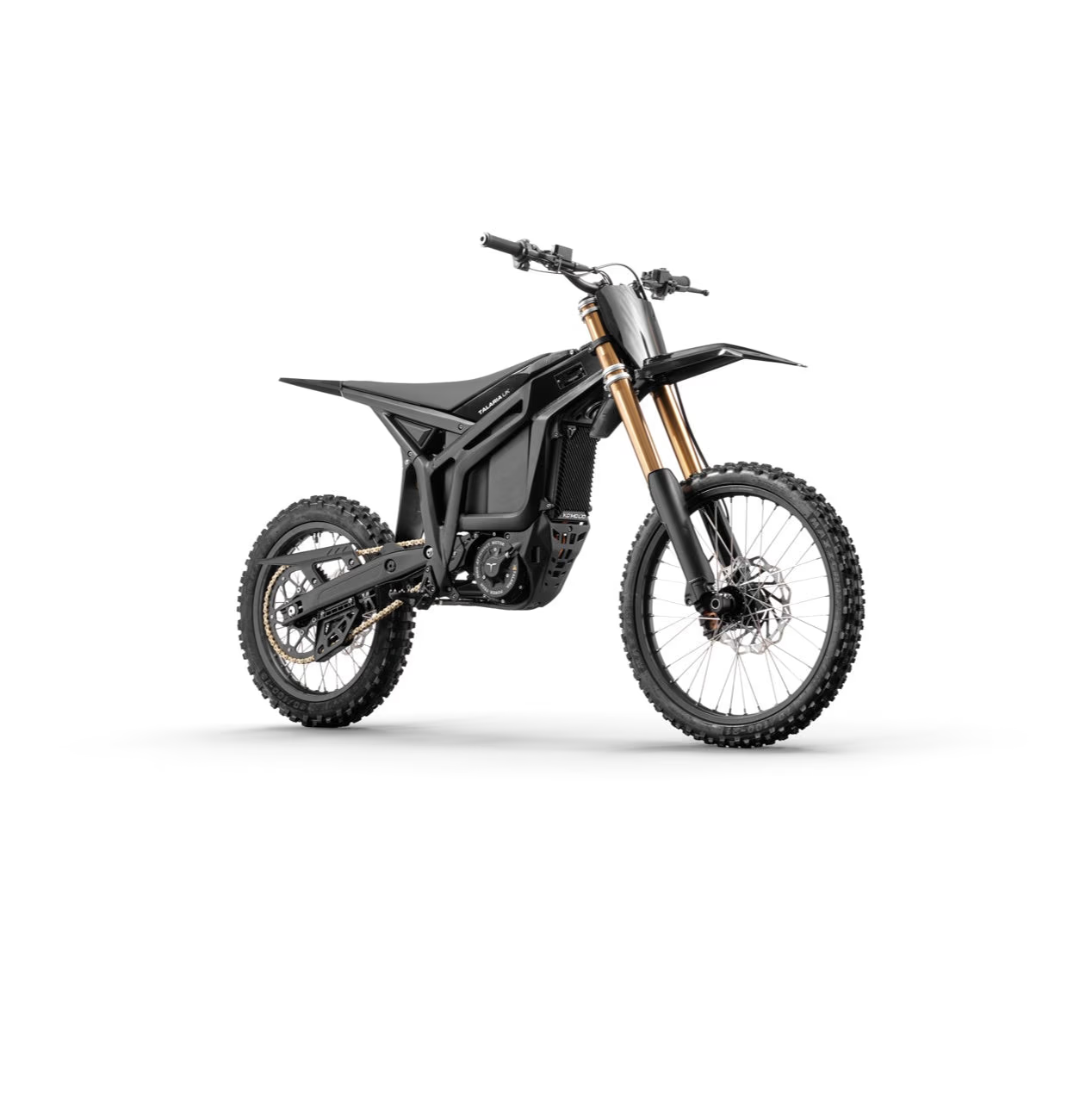 Talaria Komodo 97.2V, 32 kW peak, 754 N·m. Full-size 21/18.
 -
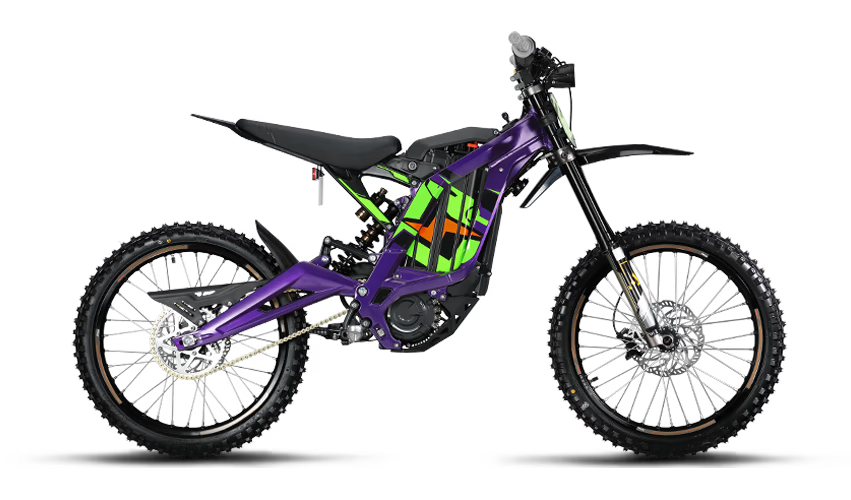 Sur-Ron Light Bee X The bike that defined the category. 8 kW peak, 60V 40Ah.
 -
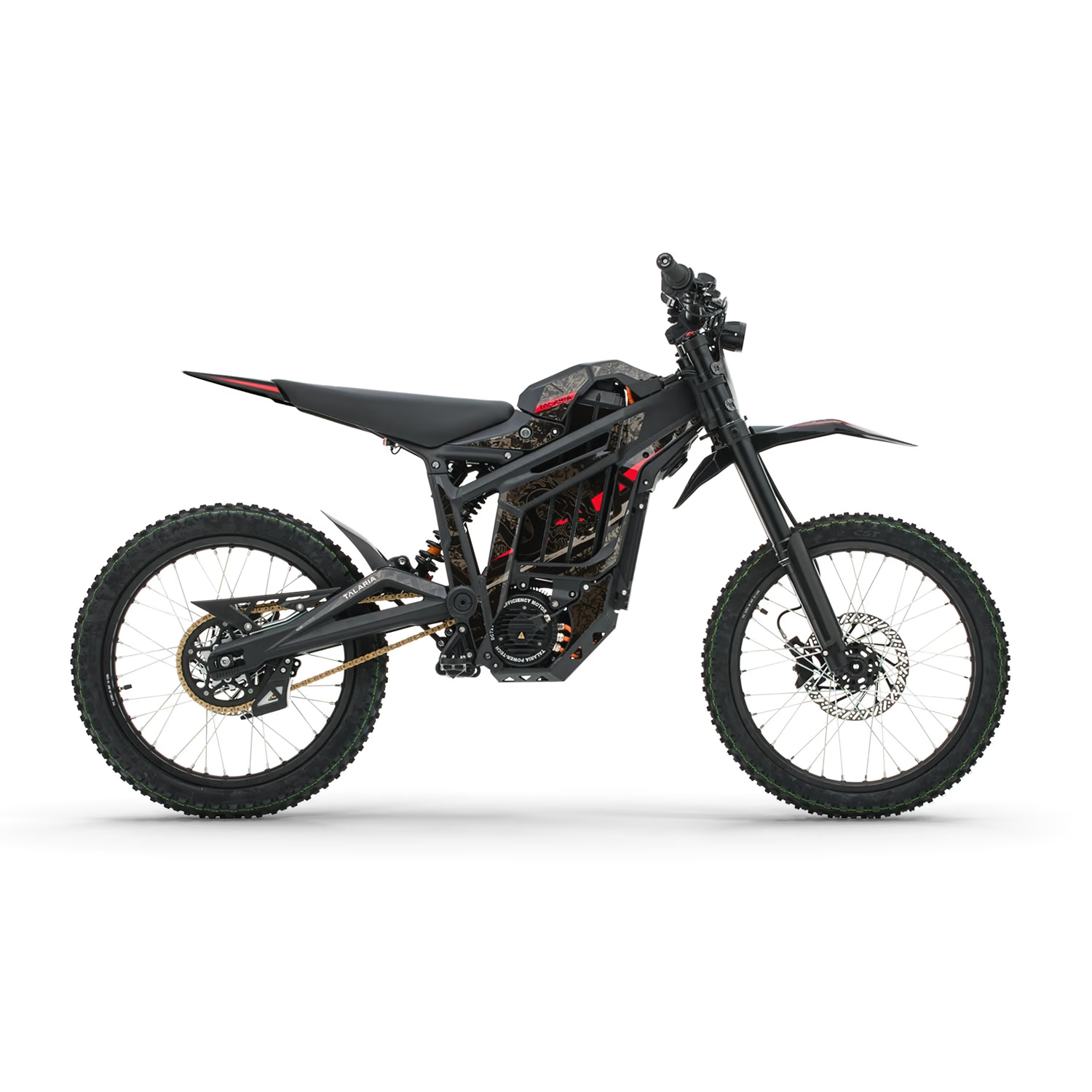 Talaria Sting MX5 Pro 72V, 13.4 kW peak unrestricted, Samsung 21700 cells.
 - Sur-Ron Ultra Bee Full-size chassis, 74V 55Ah, 440 N·m at the wheel.
-
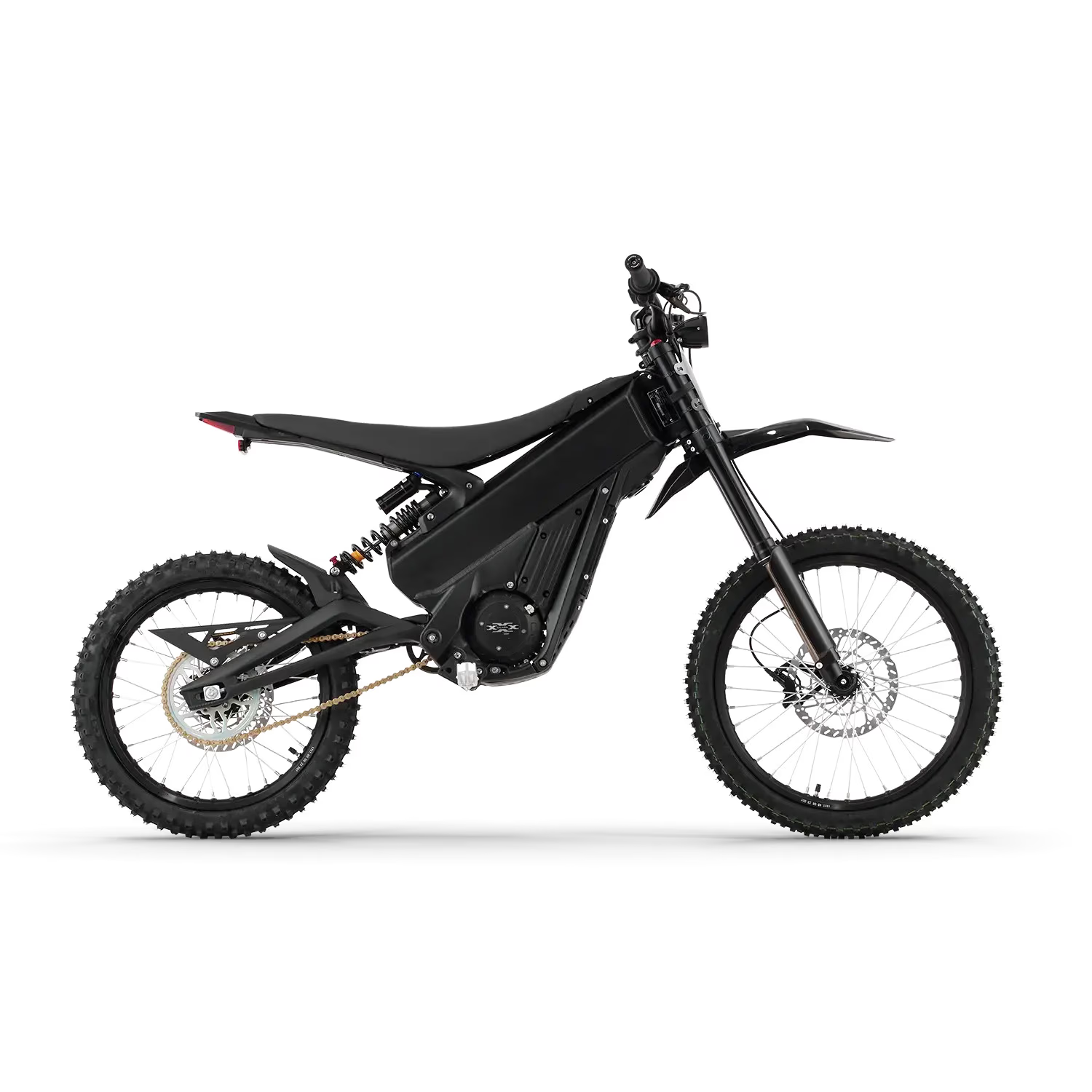 Talaria X3 MX Air-cooled IPM, 121 lb, up to 62 miles.