Guide
Are Sur-Ron and Talaria Electric Dirt Bikes Street Legal? US Laws Explained
A straight answer on where you can legally ride a Sur-Ron or Talaria in the United States, what California's new SB 586 "eMoto" category actually changes, and what OHV registration requires.
Updated 2026-08-09
The short answer
A stock Sur-Ron or Talaria is not street legal in most of the United States.
If you are searching for a street legal electric dirt bike or a street legal electric motorcycle, the honest position is that these machines are neither in the form they ship in. Whether an electric motorcycle is street legal turns on the paperwork it was imported with, not on the equipment bolted to it — which is the part almost every listing gets wrong.
This is not a grey area, and we would rather tell you plainly before you buy than have you find out from a traffic stop.
Federal law defines a low-speed electric bicycle as having functional pedals, a motor under 750 watts, and a top assisted speed under 20 mph. Every machine we sell fails all three tests, by a wide margin. That puts them in the same legal bucket as a gas dirt bike: an off-road motorcycle.
Why they are not “electric bicycles”
This is the confusion that causes most of the trouble, and it is largely manufactured by sellers who benefit from it. Compare the machines against the limit:
| Model | Motor peak | Top speed | E-bike limit |
|---|---|---|---|
| Talaria X3 MX | 5,000 W | 47 mph | 750 W / 20–28 mph |
| Sur-Ron Light Bee X | 8,000 W | 47 mph | 750 W / 20–28 mph |
| Sur-Ron Ultra Bee | 12,500 W | 56 mph | 750 W / 20–28 mph |
| Sur-Ron Storm Bee | 22,500 W | 68 mph | 750 W / 20–28 mph |
| Talaria Komodo | 32,000 W | 65 mph | 750 W / 20–28 mph |
A Light Bee X produces more than ten times the power an e-bike is permitted. A Komodo produces more than forty times. Bolting a pedal kit to one does not make it a bicycle — pedal kits exist for convenience and a handful of narrow regulatory situations, and no enforcement officer treats a 12.5 kW motorcycle as a bicycle because it has cranks.
If a seller describes one of these as an e-bike you can ride on bike paths, they are either misinformed or lying to close a sale.
What California SB 586 actually did
California Senate Bill 586 was signed into law and took effect on 1 January 2026. It created the first legal framework in the country specifically for Sur-Ron-style machines, introducing a new “eMoto” vehicle category.
This matters, because before SB 586 these bikes existed in a definitional gap — too powerful to be bicycles, not built to be street motorcycles. The law closes that gap.
What it does not do is make them street legal. Creating a category is not the same as granting road access. Riding on public roads, in bike lanes, or on multi-use paths remains illegal in most places. Some sellers are blurring this distinction in their marketing. We are not going to.
Where you can ride
| Location | Legal? | Notes |
|---|---|---|
| Private property | Yes | With the landowner’s permission |
| Designated OHV areas | Yes | Registration and helmet required |
| Public roads | No | In most jurisdictions |
| Bike lanes and multi-use paths | No | These are not e-bikes |
| Sidewalks | No | — |
California OHV registration
To ride in a designated OHV area in California you need:
- OHV registration from the California DMV — the green sticker.
- A compliant safety helmet.
- Compliance with the posted rules of the riding area, including spark arrestor and sound requirements where they apply.
Registration is straightforward and inexpensive. We can walk you through it — get in touch if you would like help.
California riders should also read our dedicated California legality and riding guide, which covers the green sticker process, where to ride, and the SB 586 questions in more detail.
Do you need a licence?
Three separate questions get tangled together here, so take them one at a time.
On private property, with permission: no licence, no registration, no insurance requirement. This is the simplest way to ride legally and it is how most owners use these machines.
In a designated OHV area: no motorcycle licence in most cases, but you do need the area’s registration — the green sticker in California — and a compliant helmet. Many riding areas set their own minimum ages and supervision rules for younger riders, so check the specific area rather than assuming.
On a public road: you would need a motorcycle licence and a registered, road-legal machine. Since a stock Sur-Ron or Talaria generally cannot be registered for road use in the first place, the licence question rarely gets that far.
Can you register one as a motorcycle?
This is the question that decides everything, and the answer is usually determined by paperwork rather than equipment.
To register a vehicle as an on-road motorcycle, a state generally wants:
- An MSO or MCO issued for an on-road vehicle
- A VIN the DMV will accept and can verify
- FMVSS-compliant equipment — DOT lighting, reflectors, mirrors, horn, turn signals and DOT tires
- EPA or CARB documentation, where it applies
Sur-Ron and Talaria machines are imported with off-road MSOs. That single document settles the outcome in most states before equipment is ever discussed. You can fit every light and mirror on the market and still be refused, because the paperwork says off-road.
A small number of states do offer an off-road-to-on-road conversion and titling path, with equipment requirements and an inspection. Where those exist they are real, state-specific and change frequently.
The only reliable process: call your state DMV before you buy, describe the exact machine and its MSO status, and ask what registration class it would fall under. We will tell you exactly what paperwork ships with anything we sell — just ask.
Street legal kits: what they do and don’t do
Street legal kits are legitimate products and we stock the parts. A good one adds a DOT-approved headlight and taillight, turn signals, mirrors, a horn and a plate mount.
What the kit gives you: the equipment your state requires, plus genuinely better visibility for dawn and dusk riding.
What the kit does not give you: a registration. The equipment is necessary but not sufficient. If your state will not title the machine because of its MSO, the hardware changes nothing.
Buy one if you have already confirmed a conversion path in your state, or if you want the lighting. Do not buy one expecting it to unlock road legality by itself.
What about insurance?
Not usually required for private land or OHV riding, but worth carrying anyway — these are expensive machines, they get stolen, and they get crashed.
Specialist powersports insurers will cover off-road electric motorcycles. Homeowner’s policies frequently will not, and auto policies almost never do. Read the actual wording rather than assuming a machine this size is covered by something you already hold.
Other states
Rules vary considerably. Some states have OHV programs closely comparable to California’s; others regulate through land-management agencies rather than vehicle registration. Before you ride somewhere new, check with the agency that manages the land.
We are not going to publish a fifty-state table that will be wrong within a year — getting one state wrong could cost you a bike. The pattern is what matters: nearly every state treats a stock Sur-Ron or Talaria as an off-highway vehicle, some offer a conversion and titling path, and no state we are aware of treats an 8 kW machine as an electric bicycle.
Riding responsibly is what keeps this legal
Worth saying directly, because it affects every owner.
The regulatory pressure on this category is increasing, and it is driven almost entirely by a visible minority riding these machines on sidewalks, through parks and on public roads. That behaviour is why access is tightening and why legislation like SB 586 exists at all.
Ride where you are permitted, register where registration is required, wear a helmet. The riders who do that are the reason this category still has legal places to exist.
Ignore the L1E and L3E badges
You will see Sur-Ron and Talaria models advertised as “L1E” or “L3E”, sometimes described as “road legal”. These are European homologation classes. They describe compliance with EU vehicle regulations and carry no legal weight in the United States.
A bike sold as L1E in the UK is not street legal in California. Any US seller implying otherwise is either confused or being careless with your money.
Ride within your ability
A separate point, but an important one. The machines at the top of our range produce more torque than many 250cc gas dirt bikes and deliver all of it instantly. If you are new to off-road riding, start on a smaller bike. If you are buying for a younger rider, see our junior rider guide.
Frequently asked
- Is a Sur-Ron street legal in the United States?
- In almost every US state, no. A stock Sur-Ron has no functional pedals, a motor far above 750 watts and a top speed far above 20 mph, so it fails the federal definition of an electric bicycle. It is treated as an off-road motorcycle.
- Did California SB 586 make Sur-Rons street legal?
- No. SB 586, effective 1 January 2026, created a dedicated "eMoto" vehicle category for Sur-Ron-style machines. It establishes a classification. It does not grant permission to ride on public roads, bike lanes or multi-use paths.
- Where can I legally ride?
- On private property with the owner's permission, and in designated off-highway vehicle (OHV) riding areas. In California, riding in a designated OHV area requires DMV off-highway registration (a green sticker) and a compliant helmet.
- What about the L1E and L3E versions I see advertised?
- L1E and L3E are European homologation classes. They have no legal meaning in the United States and do not make a machine street legal here. Treat any US seller implying otherwise with caution.
- Do I need a license to ride a Sur-Ron?
- Not on private property, and not in most designated OHV areas — though many riding areas set their own age and supervision rules. A motorcycle licence would be required for road use, but since a stock machine generally cannot be registered for the road, the question rarely arises in practice.
- Can you register a Sur-Ron as a motorcycle?
- In most states, no. Registration turns on the MSO the machine ships with, and these are imported with off-road MSOs. A handful of states offer an off-road-to-on-road conversion and titling path with equipment and inspection requirements. Call your state DMV with the specific machine before you buy, rather than relying on a forum post from another state.
- Do street legal kits make a Sur-Ron road legal?
- Not on their own. A kit adds the equipment a state requires — DOT lighting, mirrors, horn, turn signals — but equipment is necessary, not sufficient. If your state will not title the machine because of its MSO, no amount of hardware changes that. Buy the kit for a conversion path you have already confirmed, or for dawn and dusk visibility.
- Do I need insurance for an electric dirt bike?
- Not usually required for private land or OHV riding, but worth carrying. These are expensive machines that get stolen and crashed. Specialist powersports insurers will cover off-road electric motorcycles; homeowner's policies frequently will not and auto policies almost never do. Check the wording before you assume you are covered.
Bikes mentioned
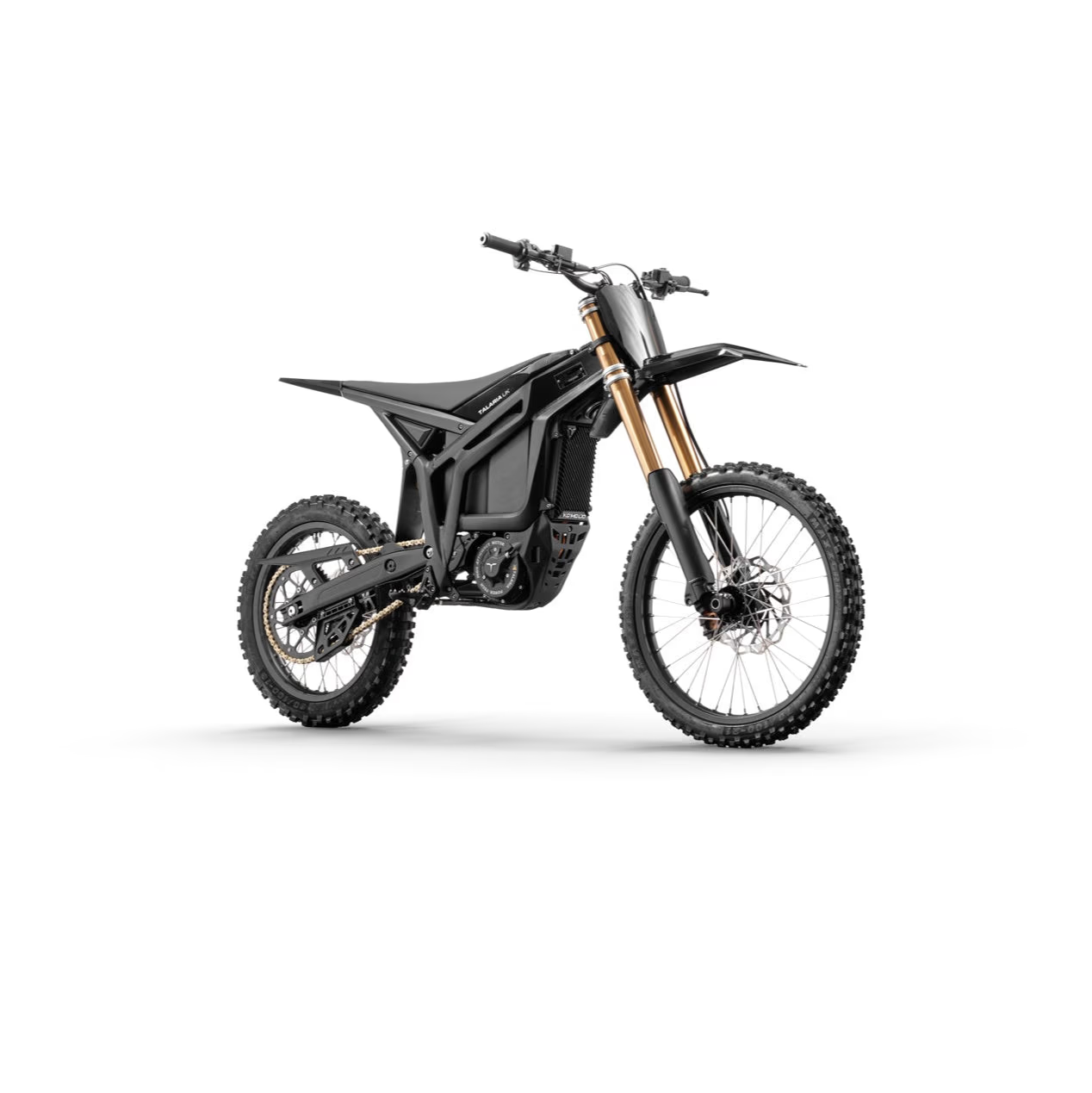
- Talaria Komodo 97.2V, 32 kW peak, 754 N·m. Full-size 21/18.
-
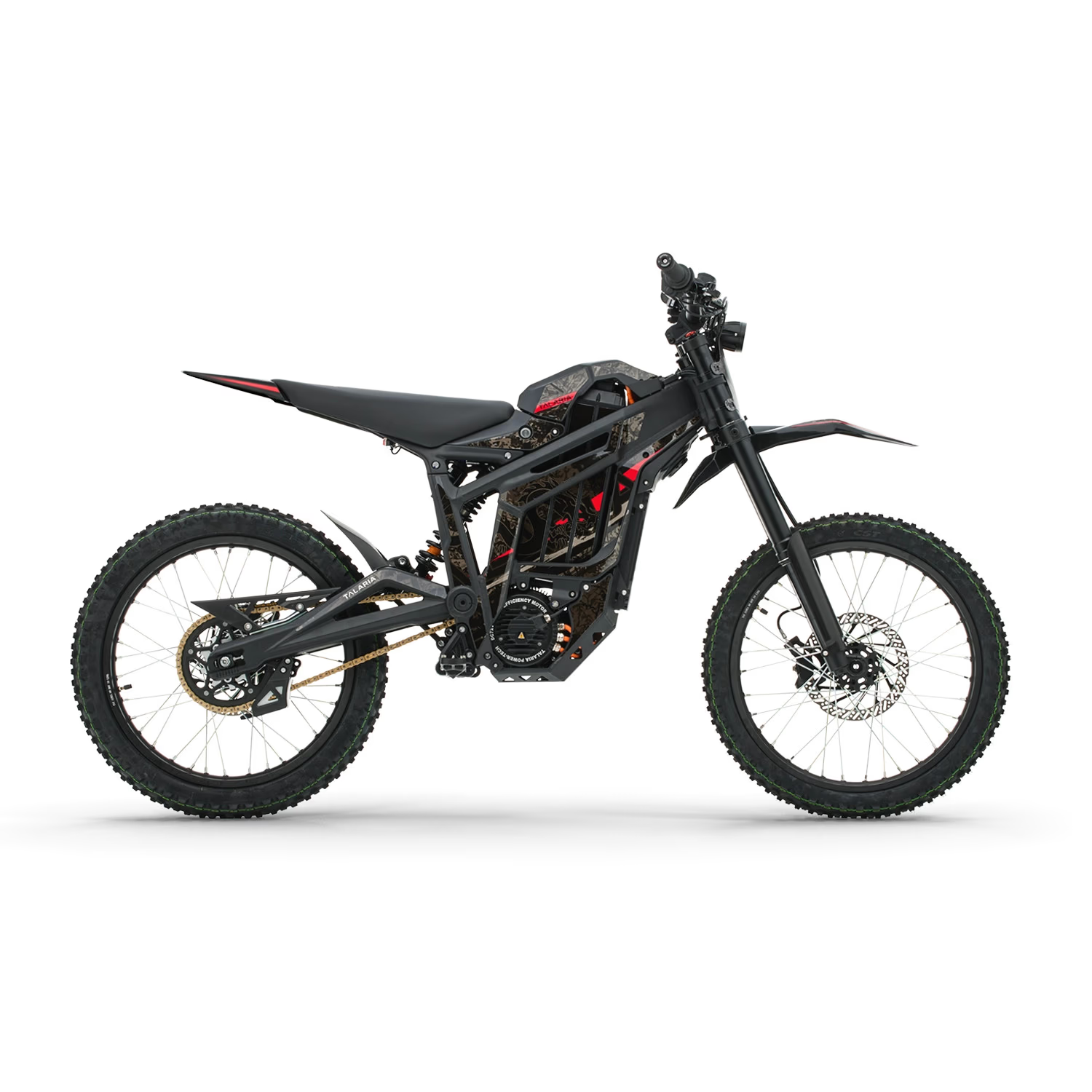 Talaria Sting MX5 Pro 72V, 13.4 kW peak unrestricted, Samsung 21700 cells.
 -
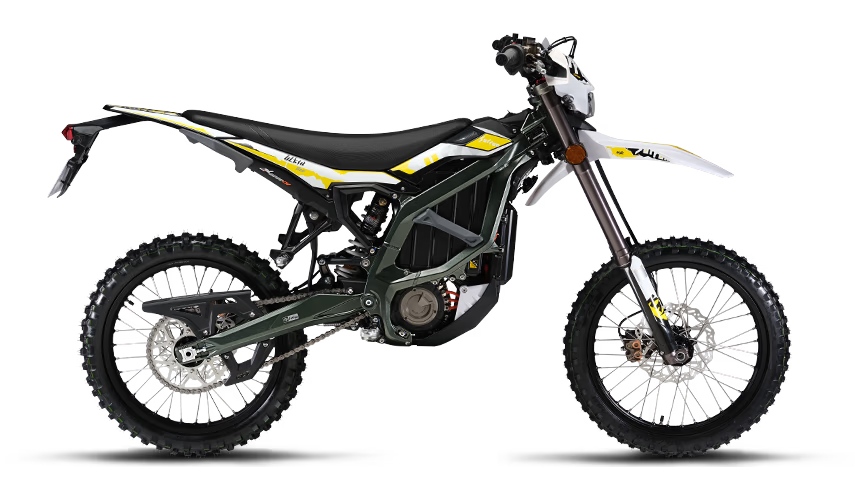 Sur-Ron Ultra Bee Full-size chassis, 74V 55Ah, 440 N·m at the wheel.