Guide
Sur-Ron Ultra Bee Review: Top Speed, Specs, Price and Who It's For
A dealer's full breakdown of the Sur-Ron Ultra Bee — real top speed, 440 Nm of torque, 62 mile range, who the 35.8 in seat height suits, and how it compares to the Light Bee X and Talaria MX5 Pro.
Updated 2026-08-12
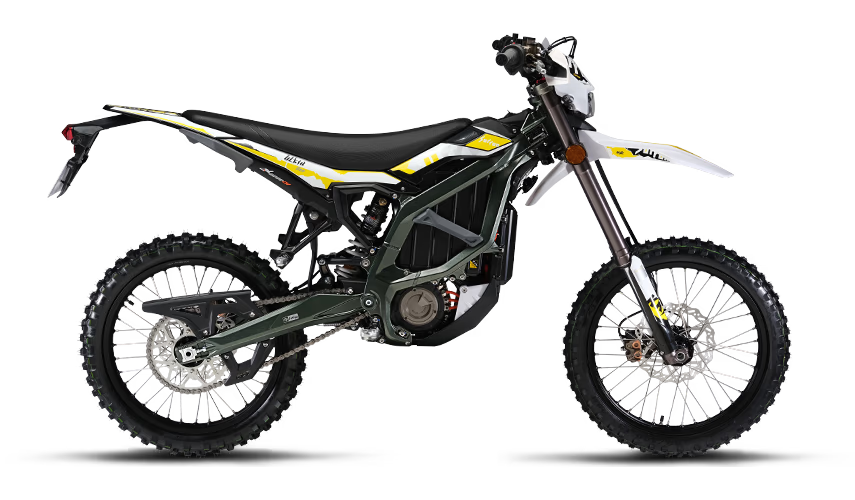
The Ultra Bee is the bike that moved Sur-Ron out of “electric bicycle that got out of hand” territory and into genuine dirt bike territory. It is the most searched Sur-Ron after the Light Bee X, and it is the model we get asked about most often — usually by riders who have outgrown a Light Bee X, or by riders coming off a gas 250 who want to know whether an electric machine can actually do the job.
Short answer: yes. Longer answer below, including the parts the marketing does not mention.
Sur-Ron Ultra Bee Specs
| Specification | Figure |
|---|---|
| Price | $5,000 (12.5 kW) · $5,800 (HP) · $6,500 (T & R) |
| Peak power | 12.5 kW (~16.8 hp) |
| Continuous power | 6 kW (~8 hp) |
| Torque | 440 Nm |
| Motor | Mid-drive PMSM with FOC sine-wave controller |
| Battery | 74V 55Ah removable Li-ion (~4.1 kWh) |
| Top speed | 56 mph |
| Range | 62 miles |
| Charge time | 4.5 hours |
| Weight | 187 lb |
| Seat height | 35.8 in |
| Suspension travel | 9.4 in |
| Brakes | 240 mm hydraulic disc, front and rear |
| Wheels | 80/100-19 front, 100/90-18 rear |
| Payload | 220 lb |
| Model years | 2024, 2025, 2026 |
Ultra Bee Trims: 12.5 kW vs HP vs T & R
The Ultra Bee is the only Sur-Ron sold in three states of tune, and this trips people up when they compare prices across dealers.
| Trim | Price | What you get |
|---|---|---|
| Ultra Bee 12.5 kW | $5,000 | The standard machine, and the one most riders should buy |
| Ultra Bee HP | $5,800 | The higher-output variant — the one people mean by “Ultra Bee HP” |
| Ultra Bee T & R | $6,500 | Top of the range |
If you have seen an Ultra Bee advertised at wildly different prices, trim is usually the explanation — assuming the listing is genuine at all. Worth being blunt: most riders are better served by the standard 12.5 kW bike at $5,000 plus $800 of suspension or tire work than by paying $1,500 to reach T & R. Talk to us about your terrain before you spend the difference.
Top Speed: What 56 mph Actually Means Here
The Ultra Bee’s headline number is 56 mph, and unlike a lot of figures in this category, it holds up. On flat, firm ground with an average-weight rider, it pulls to the claim cleanly rather than crawling the last few miles per hour.
What matters more is how it gets there. The FOC sine-wave controller and PMSM motor deliver 440 Nm from a standing start with no clutch, no gears and no delay. The Ultra Bee does not build speed — it arrives at it. Roll-on from 20 to 40 mph is where the bike genuinely surprises people coming off gas machines, because there is no downshift, no powerband to find, and no lag.
The practical ceiling on a trail is not the top speed, it is traction and terrain. You will spend most of a ride between 15 and 35 mph, and the reason the Ultra Bee feels fast there is the torque, not the peak.
A note on continuous output: 12.5 kW peak against 6 kW continuous. On a long, steep climb, or in sustained deep sand, the continuous figure is what you are actually working with. That is normal for the class — the Storm Bee runs 10 kW continuous and is the model to look at if sustained output is your priority.
Range: 62 Miles, and What Moves It
The 74V 55Ah pack holds roughly 4.1 kWh, which supports the 62 mile claim — a substantial figure in this class, and a genuine 32% improvement over the Light Bee X’s 47 miles.
Real-world range varies more on an electric dirt bike than on almost any other vehicle, because throttle discipline is the dominant variable:
- Steady trail riding, moderate throttle — you will get close to the claim
- Technical climbing and aggressive riding — expect meaningfully less; sustained high torque draw is the biggest consumer
- Sustained high-speed running — aerodynamic drag and continuous output limits both bite
- Rider weight — the 220 lb payload rating is real, and heavier riders will see reduced range
- Cold weather — lithium chemistry loses capacity in the cold, temporarily
The pack is removable, which is one of the Ultra Bee’s most underrated practical features. You can carry it inside to charge, store it at sensible temperature over winter, and — if you buy a second pack — effectively double your ride day. If you live in an apartment or park outdoors, this alone may decide the purchase. Full charge takes 4.5 hours.
We stock genuine Ultra Bee batteries and charging hardware.
Chassis, Suspension and Brakes
This is where the Ultra Bee separates itself from the Light Bee X, and it is the part buyers underweight.
9.4 in of suspension travel with a 19 in front and 18 in rear wheel puts the Ultra Bee in full-size dirt bike territory. The Light Bee X runs 7.9 in on a 19/18 combination and is noticeably more of a compact machine. On rough ground at speed, the extra travel is the difference between riding the terrain and being beaten up by it.
240 mm hydraulic discs front and rear are appropriately sized for 187 lb plus rider, and they need to be — regenerative braking does some work but nowhere near enough on a steep descent.
187 lb is the number to sit with. That is substantially heavier than the 126 lb Light Bee X and it changes the character of the bike completely. On flowing trail and open terrain the weight works for you: the Ultra Bee is planted, stable and confidence-inspiring at speed. In tight, technical, low-speed terrain — rock gardens, hairpins, anywhere you have to physically muscle the bike — you will feel every pound. Picking it up after a fall on a hillside is a genuine effort.
35.8 in seat height is a hard filter. This is a full-size machine. Around 5’9” and up, you are fine. Under about 5’7”, you will be on your toes at stops, and that becomes a real safety issue on off-camber ground. Shorter riders should be looking at the Light Bee X at 32.7 in or the Talaria Sting MX5 Pro at 33.1 in.
Ultra Bee vs Light Bee X
The most common question we get, and the answer is not “buy the bigger one.”
| Ultra Bee | Light Bee X | |
|---|---|---|
| Peak power | 12.5 kW | 8 kW |
| Torque | 440 Nm | 266 Nm |
| Top speed | 56 mph | 47 mph |
| Range | 62 mi | 47 mi |
| Battery | 74V 55Ah | 60V 40Ah |
| Weight | 187 lb | 126 lb |
| Seat height | 35.8 in | 32.7 in |
| Suspension travel | 9.4 in | 7.9 in |
Buy the Ultra Bee if you are 5’9” or taller, ride open or fast terrain, want real range, and want a machine that feels like a full-size dirt bike.
Buy the Light Bee X if you are shorter, ride tight technical trails, want the lightest bike to throw around, or care most about aftermarket depth — the Light Bee platform has the deepest parts ecosystem in the entire category, and that is a real long-term ownership advantage.
The 61 lb weight difference is the deciding factor far more often than the power difference is.
Ultra Bee vs Talaria Sting MX5 Pro
The closest cross-brand rival, and genuinely close.
The MX5 Pro brings more peak power (13.4 kW), more torque (500 Nm) and a higher top speed (60 mph), in a chassis 24 lb lighter at 163 lb with a more accessible 33.1 in seat, on a removable 72V Samsung-celled pack.
And it does it at $4,990 against the Ultra Bee’s $5,000 — effectively identical money.
The Ultra Bee answers with 10 more miles of range (62 vs 52), more suspension travel, and — decisively for many buyers — Sur-Ron’s parts and aftermarket support.
Our call: if you are tall and ride open terrain where range and travel matter, Ultra Bee. If you are shorter, ride tighter, or want maximum specification per dollar, MX5 Pro. Neither is a wrong answer. The full breakdown is in our Sur-Ron vs Talaria comparison.
Who Should Buy an Ultra Bee
Good fit:
- Riders 5’9” and above
- Anyone stepping up from a Light Bee X who wants more bike
- Gas dirt bike riders moving to electric who do not want to compromise on size
- Open desert, fire road and fast trail riders
- Anyone who needs genuine 50+ mile range
- Riders who want a removable pack for indoor charging or a second battery
Poor fit:
- Complete beginners. 440 Nm with no clutch is not a learning environment. Start on a Talaria X3 MX or a Light Bee X.
- Riders under about 5’7”
- Tight, technical, low-speed trail specialists — the weight works against you
- Anyone expecting a street-legal machine
Is the Ultra Bee Street Legal?
No, not in stock form in most US jurisdictions, and you should treat any seller who tells you otherwise as a warning sign.
The Ultra Bee is a high-powered electric off-road motorcycle. It is not a bicycle, and “e-bike” branding on a listing does not change its legal classification. It is intended for private land and designated OHV riding areas.
Street-legal kits exist for some configurations, and some states offer registration pathways — but legality is determined by your state and county, not by the machine.
California riders: SB 586 created a dedicated “eMoto” vehicle category effective 1 January 2026. It establishes a classification; it does not confer street legality. Riding designated OHV areas still requires DMV off-highway (green sticker) registration and a compliant helmet.
Full detail, state by state: electric dirt bike laws.
Ownership, Parts and Upgrades
The Ultra Bee is well supported and the aftermarket is growing quickly. The upgrades that actually matter, in order of how often we fit them:
- Tires — the stock rubber is a compromise. Matching tires to your terrain is the single highest-value change you can make.
- Brake upgrades — the Ultra Bee rear brake assembly is a common early replacement for riders doing sustained descents.
- Graphics and plastics — cosmetic, but these bikes get crashed and bodywork is consumable.
- Gearing — sprocket changes trade top speed for climbing torque. Worth considering if you ride mostly technical terrain.
- Second battery — the highest-impact upgrade for anyone doing full ride days.
Expect faster consumable wear than a comparable gas bike. 440 Nm is hard on chains, sprockets and rear tires, and 187 lb is hard on brake pads.
Browse Ultra Bee parts and upgrades →
Verdict
The Ultra Bee is the model that makes the strongest case for electric off-road riding to a rider who has never taken it seriously. It is fast enough to be genuinely exciting, has range enough for a real ride day, and — critically — is sized and suspended like an actual dirt bike rather than an oversized bicycle.
Its limitations are honest ones: it is heavy in technical terrain, it is too tall for shorter riders, and its continuous output is well below its peak. None of those are dealbreakers for the rider it is built for. All of them are dealbreakers for the rider it is not.
If you are 5’9”+, riding open terrain, and want one machine that does most things well, this is the one.
Buy the Ultra Bee From an Authorized Dealer
Search “Sur-Ron Ultra Bee for sale” and most of what you will find are storefronts with no stock, no dealer relationship, and in several cases no intention of shipping you a bike. Counterfeit and grey-market Ultra Bees are a real problem in this market.
Buying from an authorized dealer gets you genuine warranty coverage, correct MSO and VIN paperwork, real parts supply, and support after the sale.
- See live Ultra Bee pricing and stock →
- Compare against the Light Bee X and Storm Bee →
- Ultra Bee parts, batteries and upgrades →
- Delivery and freight →
- Not sure it’s the right bike? Ask us →
We are based in San Jose, California and ship to all 50 states. Every bike is uncrated, inspected and set up before it leaves us. If you are local, come and see one in person — seat height is much easier to judge sitting on the bike than reading a number.
Frequently asked
- What is the Sur-Ron Ultra Bee top speed?
- 56 mph. That is the manufacturer figure and it is realistic — the Ultra Bee pulls to it cleanly on flat, firm ground with an average-weight rider. Expect less into a headwind, uphill, on soft surfaces, or with a heavier rider, which is true of every machine in this category.
- How much horsepower does the Ultra Bee have?
- 12.5 kW peak, which is roughly 16.8 hp, and 6 kW continuous, roughly 8 hp. Peak is the burst figure; continuous is what sustains on a long climb. The more meaningful number for how it feels is torque — 440 Nm, delivered instantly from zero rpm.
- What is the Ultra Bee's range?
- 62 miles claimed, from a 74V 55Ah pack — roughly 4.1 kWh. Real-world range depends heavily on how you ride. Steady trail riding gets close to the claim; aggressive throttle use, technical climbing and high-speed running will cut it substantially, as with any electric machine.
- Is the Sur-Ron Ultra Bee street legal?
- Not in stock form in most US jurisdictions. It is a high-powered electric off-road motorcycle intended for private land and designated OHV areas. Street-legal kits exist for some configurations, but legality is decided by your state and county. California SB 586 created an "eMoto" category effective 1 January 2026 — it classifies these machines, it does not make them street legal.
- How tall do you need to be for an Ultra Bee?
- The seat sits at 35.8 in, which is genuine full-size dirt bike territory. Riders around 5'9" and up will be comfortable. Under about 5'7" you will be on your toes at a stop, and on technical terrain that becomes a real problem. Shorter riders should look at the Light Bee X at 32.7 in or the Talaria Sting MX5 Pro at 33.1 in.
- Ultra Bee or Light Bee X?
- The Ultra Bee is a bigger, faster, longer-range machine — 12.5 kW versus 8 kW, 56 mph versus 47 mph, 62 miles versus 47 miles. It is also 61 lb heavier and sits 3.1 in taller. If you are tall, ride open terrain and want range, the Ultra Bee. If you are shorter, ride tight trails, or want the deepest aftermarket support, the Light Bee X.
Bikes mentioned
-
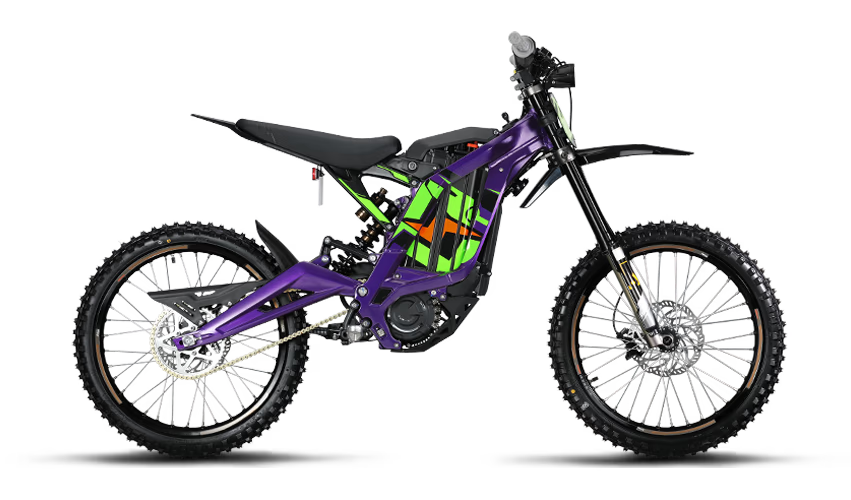 Sur-Ron Light Bee X The bike that defined the category. 8 kW peak, 60V 40Ah.
 -
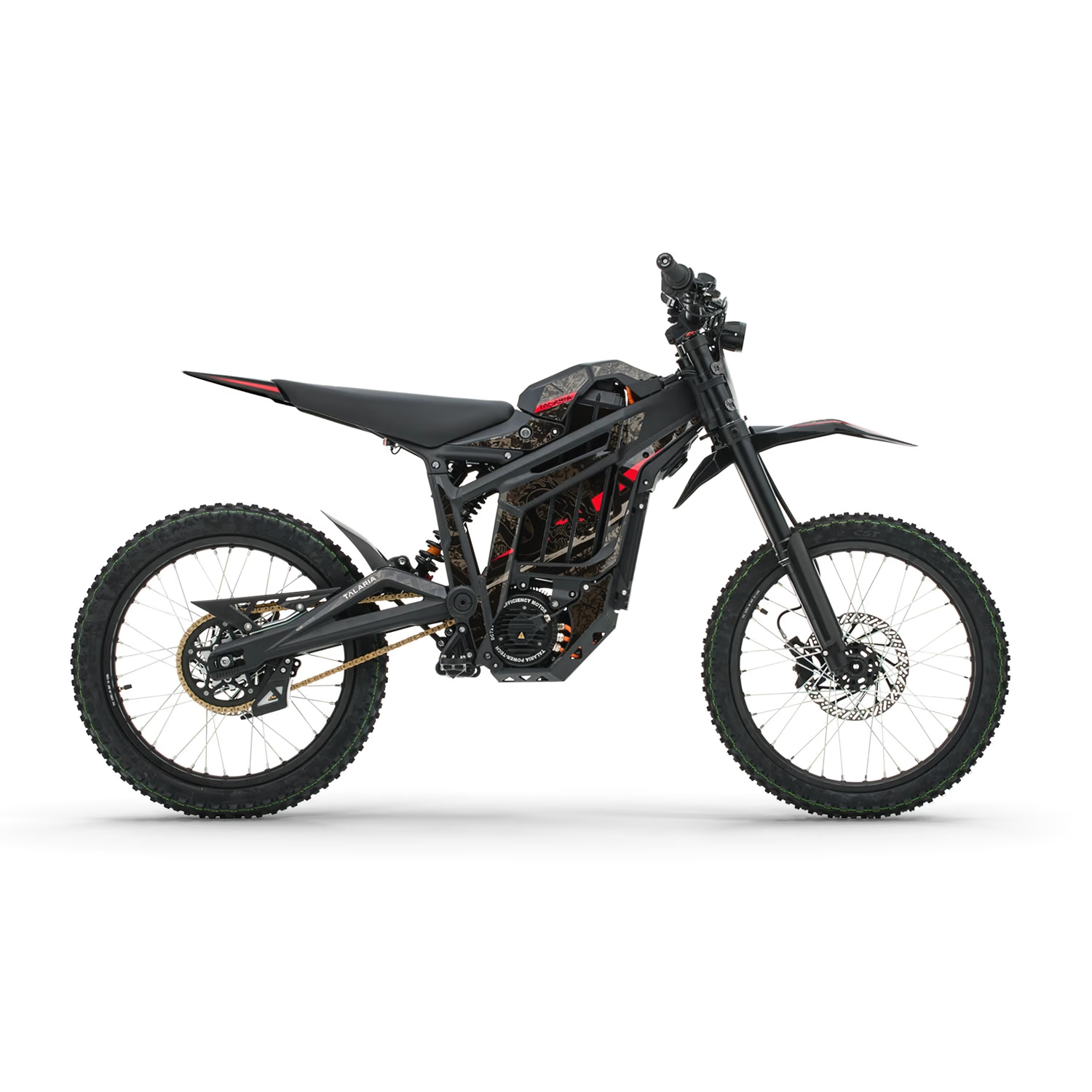 Talaria Sting MX5 Pro 72V, 13.4 kW peak unrestricted, Samsung 21700 cells.
 -
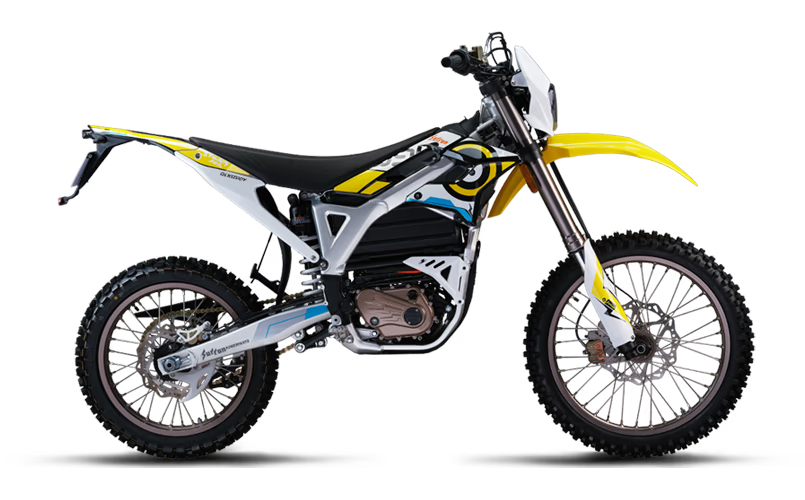 Sur-Ron Storm Bee Liquid-cooled, 22.5 kW peak, 104V. Full-size motocross.
 - Sur-Ron Ultra Bee Full-size chassis, 74V 55Ah, 440 N·m at the wheel.