Guide
Buying a Used Sur-Ron or Talaria: What to Check Before You Pay
The battery is the whole risk, and you cannot see it. A dealer's checklist for buying a used electric dirt bike — what to inspect, what to ask, and when the numbers stop making sense.
Updated 2026-08-13
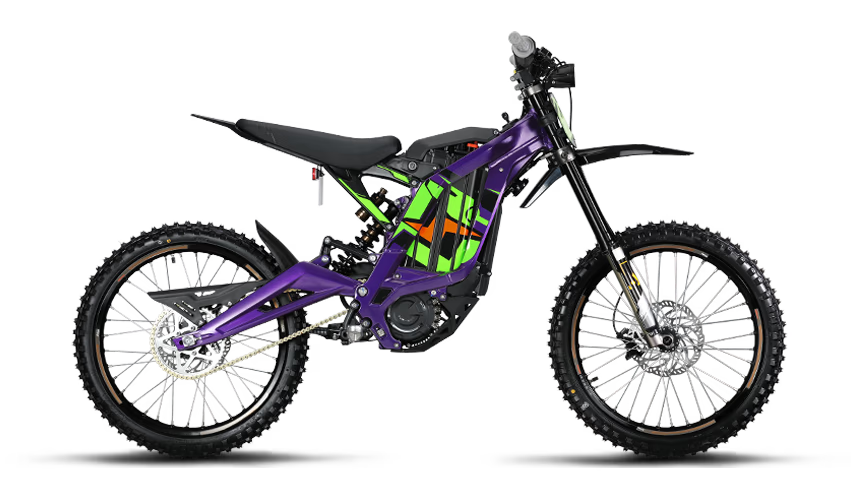
Used Sur-Rons and Talarias are among the most searched things in this category, and the maths is simpler than most buyers make it.
You are buying a battery with a bike attached.
That applies whether you are looking at a used Surron for sale, a used Talaria X3, or a used Light Bee X — the machine around the pack varies far less than the pack itself does.
The pack is the most expensive component, it is the one whose condition you cannot see, and replacing it usually costs more than the discount you negotiated. Everything below follows from that.
We sell new bikes, so read this with that in mind — but we would rather you buy a good used bike than a bad one, and the checks below are the ones we would run ourselves.
Start with the battery
Ask before you travel
Three questions, by message, before you spend an afternoon driving:
- How has it been stored? The right answer is somewhere temperate, at part charge, not sitting on a charger. “In the garage, always plugged in” is a bad answer and a very common one.
- How many charge cycles? Many displays will tell you. A vague answer is itself informative.
- Has the pack ever been opened or repaired? A repaired pack is not automatically bad, but it changes what you are buying.
Then test it properly
Charge it in front of the seller. Watch for heat, and for a pack that reaches full unusually quickly — that is capacity loss, not efficiency.
Ride it under load. This is the test that matters. A tired pack behaves fine at rest and betrays itself under current draw: voltage sags, power drops off, and the bike cuts well before the display reads empty. A gentle lap of a car park tells you nothing. Get it up a hill.
Check the pack sits and locks correctly. On removable-battery models — Light Bee X, Ultra Bee, Storm Bee, and the removable-pack Stings — pull it out and put it back. Mounts get bent in crashes and the lock is a known wear point.
Cold weather masks nothing and exaggerates everything: a pack tested at 35°F will underperform a healthy one. Factor the conditions into what you saw.
Then the frame
These machines get crashed. Hard, and often by people who bought more bike than they could ride.
The swingarm pivot area. Look for cracks, weld repairs, ovaled bolt holes and paint that does not match. This is a high-stress area and a repair here is a walk-away.
The headstock. Ripples in the paint behind the steering head mean a front-end impact. Check the forks are parallel and the front wheel tracks straight when you roll it.
Fork seals and stanchions. Weeping seals are cheap; pitted or scored stanchions are not. Sight down them.
Wheels and bearings. Lift each wheel, spin it, and rock it side to side. Play means bearings. Buckles mean a hard landing.
Then the drivetrain
Instant torque is hard on parts, and a neglected drivetrain tells you how the whole bike was treated.
- Chain and sprockets. Hooked sprocket teeth and a chain you can pull away from the rear sprocket mean a set is due. Cheap, but negotiate it.
- Rear tyre. Squared-off or worn to the carcass suggests hard road use.
- Brake pads and disc thickness. These bikes are heavy for their size and pads go quickly.
None of this is expensive individually. All of it together tells you whether the previous owner maintained anything.
Then the paperwork — and this is where people lose money
Ask for the MSO or MCO and the VIN documentation before you agree a price.
Without them:
- You have no registration path anywhere registration is available.
- You have no way to prove the machine is not stolen — and these are stolen frequently.
- You have no warranty position, even on a bike still within its term.
Check the VIN on the frame matches the paperwork and matches the model. A grey import brought in outside the authorized channel will often have no US-usable documentation at all, and the seller may not know that.
A bike with no paperwork is worth substantially less than one with it, regardless of condition. If the seller cannot produce it, that is your answer.
Counterfeits are real
There is a genuine counterfeit market for these machines, particularly Sur-Ron. The badge and bodywork are convincing; the cells, controller and brakes are not.
Check the model code against the frame, look for genuine markings on the battery and controller, and treat a price far below market as the warning it is. Our model pages list the correct model codes — for example the Ultra Bee and Sting R MX4 — so you can check what you are looking at against the real specification.
When the numbers stop working
Run this before you commit:
Used price + likely battery replacement + deferred maintenance vs new price
If a used bike needs a pack, that sum usually lands above the price of a new machine with a warranty and correct paperwork. This is the single most common way people lose money in this category — a bargain that needed a battery.
For reference, our new pricing starts at $3,295 for an X3 MX and $4,000 for a Light Bee X. If a used example is within a few hundred dollars of that, the used bike has to be genuinely excellent to make sense.
Which used models hold up best
Sur-Ron Light Bee X. The safest used buy in the category. Longest production history, deepest parts supply, and anything worn can be replaced off the shelf.
Talaria X3. Well supported, huge numbers sold, and the low seat means many were bought by lighter riders — often gentler lives.
Ultra Bee and Storm Bee. More bike, and more likely to have been ridden hard. Inspect the suspension and frame with extra care.
Anything modified. Aftermarket controllers and higher-voltage packs change what the drivetrain has endured and void any remaining warranty. Not automatically a no, but price it as a project.
What we would tell a friend
Buy the newest, most standard, best-documented example you can afford. Pay more for paperwork. Ride it up a hill before you pay. And price the battery.
If you would rather skip the risk entirely, everything we sell is new, in stock in San Jose, ships with correct MSO and VIN documentation, and carries a warranty that will actually be honoured.
See what is in stock · Sur-Ron range · Talaria range · Ask us a question
Frequently asked
- Is a used Sur-Ron worth buying?
- It can be, but the battery is the whole risk. A pack is the single most expensive component on the bike and its condition is not visible. Ask for cycle count and charging history, ride the bike under load, and check the frame around the swingarm pivot and headstock. A cheap bike with a tired pack is not cheap.
- How do I check the battery on a used electric dirt bike?
- Charge it in front of the seller and watch for heat or an unusually fast charge — both suggest reduced capacity. Then ride it hard enough to draw real current. A tired pack betrays itself under load, not at rest, by sagging voltage and cutting power well before the display reads empty.
- What paperwork should a used Sur-Ron come with?
- The MSO or MCO and clear VIN documentation. Without them you have no registration path anywhere registration is available, no way to prove the machine is not stolen, and no warranty position. Walk away from a bike with no paperwork regardless of the price.
- How many miles is too many on an electric dirt bike?
- Mileage matters far less than how the pack was treated. A 300-mile bike stored at full charge in a hot garage for two summers can be in worse shape than a 1,500-mile bike that was ridden regularly and stored properly. Ask about storage before you ask about mileage.
- Should I buy used or new?
- If a used bike needs a battery, the economics usually collapse — a pack is the most expensive part on the machine. Price the replacement before you commit. Buying new also gets you warranty, correct paperwork and a bike that has been set up rather than sold on after a season of unknown abuse.
- Are there counterfeit Sur-Rons?
- Yes, and they turn up on the used market. Check that the VIN and model code match the machine, that the battery and controller carry genuine markings, and be suspicious of a price far below the market. Counterfeits fail, and occasionally they fail dangerously.
Bikes mentioned
-
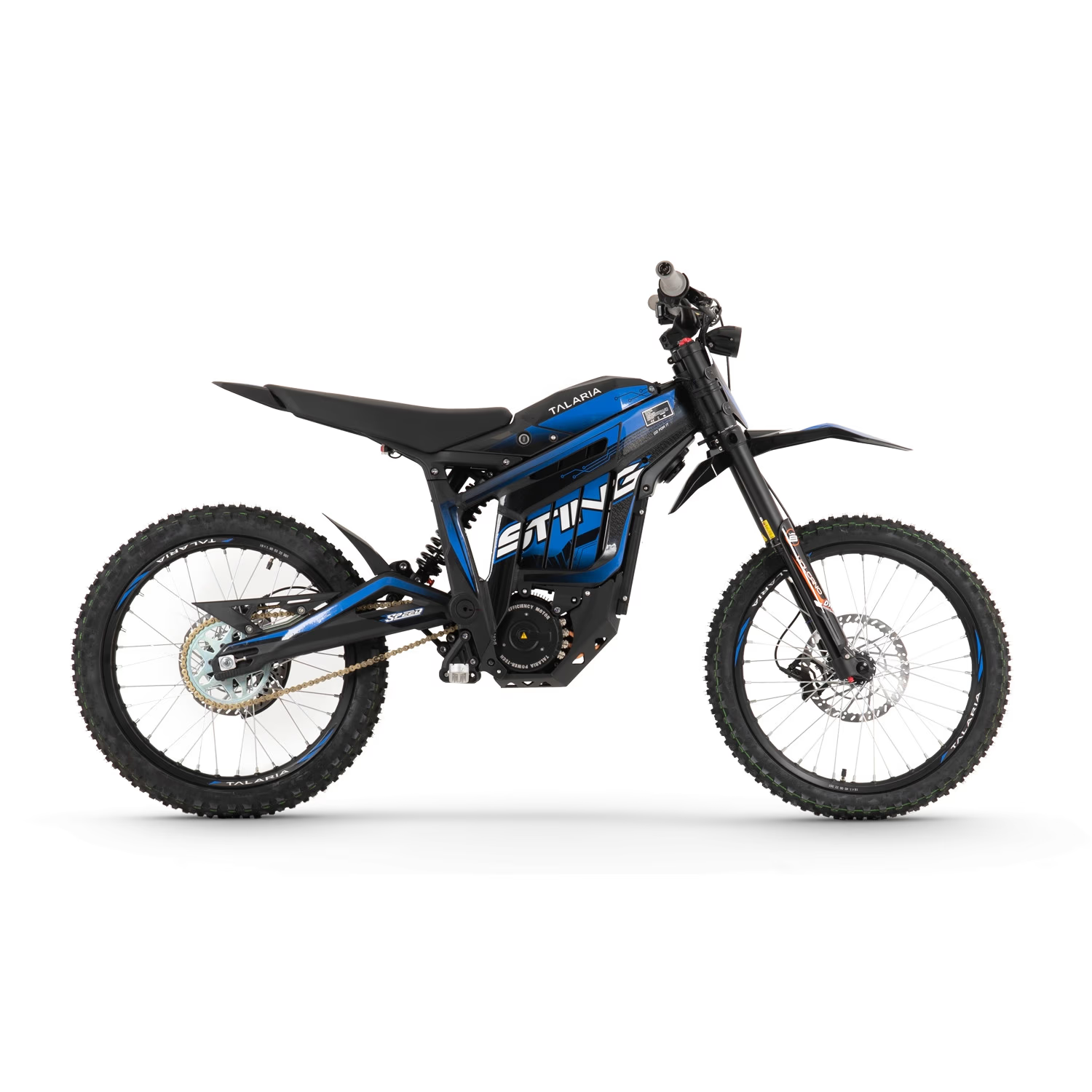 Talaria Sting R MX4 8 kW peak, 60V 45Ah, 55 mph.
 - Sur-Ron Light Bee X The bike that defined the category. 8 kW peak, 60V 40Ah.
-
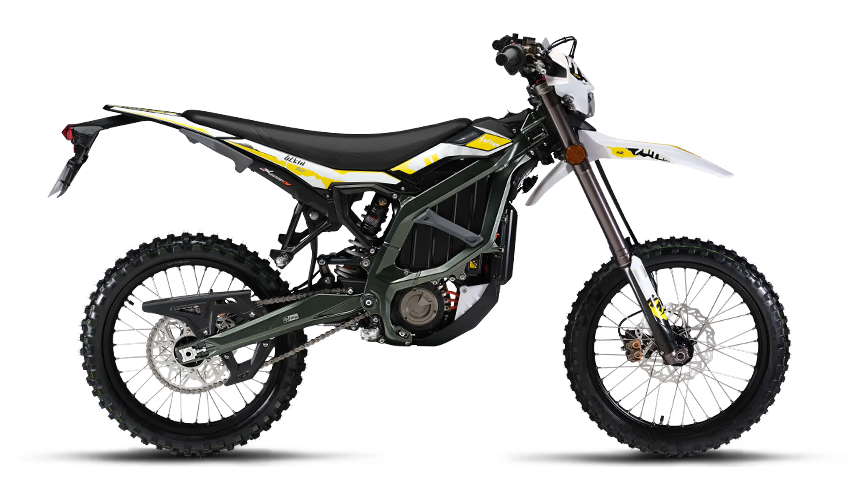 Sur-Ron Ultra Bee Full-size chassis, 74V 55Ah, 440 N·m at the wheel.
 -
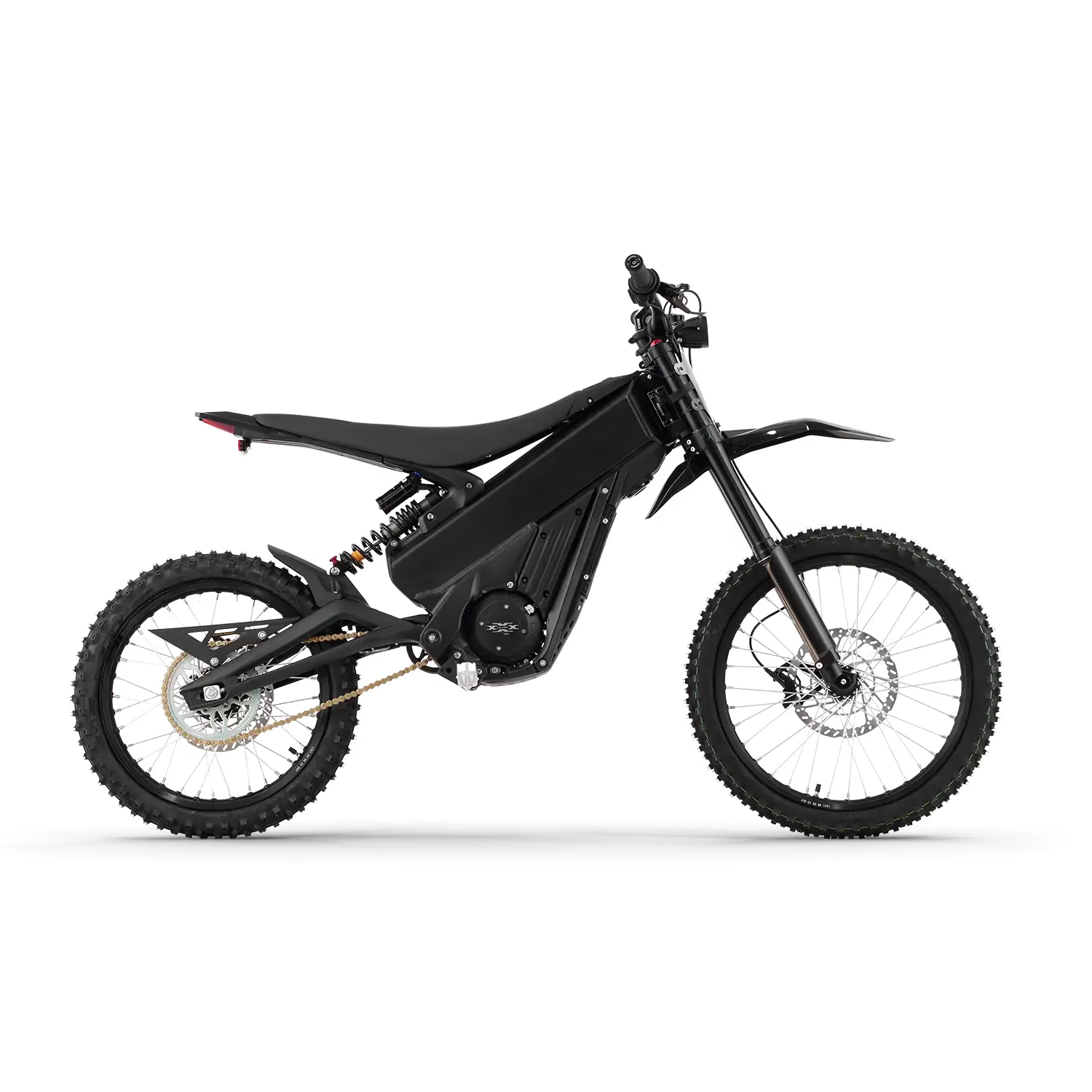 Talaria X3 MX Air-cooled IPM, 121 lb, up to 62 miles.