Guide
How We Ship Electric Dirt Bikes: Battery Rules, Freight and Timing
What Class 9 lithium classification means for your delivery, how US ground freight differs from air and sea, and what international buyers should expect on duties.
Updated 2026-08-09
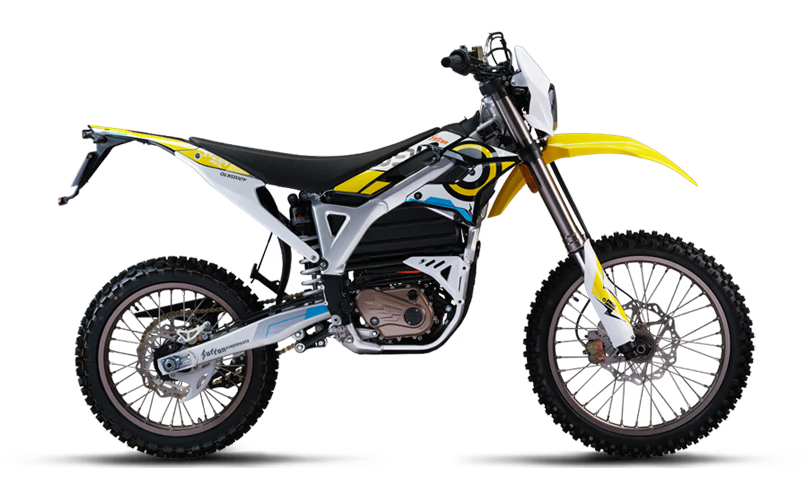
The battery is what makes this complicated
A complete electric dirt bike ships as UN3481, Class 9 — lithium-ion batteries contained in equipment. Class 9 is the “miscellaneous dangerous goods” category, and it changes who can carry your bike, how it must be packed, and what it costs.
This is not us adding a surcharge. It is a regulatory reality for every seller in this category, and anyone quoting you standard parcel rates for a complete bike either has not shipped one or is not being straight with you.
US ground freight
For domestic ground transport, US regulations provide meaningful relief. Lithium batteries meeting 49 CFR §173.185(c) are exempt from some hazard communication and packaging requirements, and Class 9 placards are not required for domestic ground transportation.
Practically, this means shipping a bike within the continental US is straightforward, and we do it every day.
- Bay Area: personal delivery, usually within a few days.
- Continental US: freight carrier, typically 5–10 business days.
- Alaska, Hawaii and offshore: longer and more expensive; we quote these individually.
Someone must be available to sign for the delivery.
Air freight is constrained
Since 1 January 2026, IATA rules require lithium-ion cells shipped in or with equipment to be at no more than 30% state of charge. Combined with Class 9 handling requirements, air freight for a complete bike is expensive and slow to arrange.
For most international orders, sea freight is the practical route.
International orders
Our bikes originate in China and are imported into the United States. For international customers we can arrange onward freight, but understand the shape of it:
- Terms are DDU/DAP. You pay destination duties, taxes and customs clearance.
- Homologation is your responsibility. If your country requires type approval for the machine to be registered, that is on the buyer.
- Sea freight lead times are measured in weeks, not days.
- Battery documentation travels with the shipment; we handle that paperwork.
Parts ship normally
Parts and accessories that do not contain cells ship as ordinary parcels, at ordinary rates and ordinary speed. Batteries and chargers are the exception and are quoted separately.
Get a real number
Use the delivery estimator for an indicative cost and timeline, or contact us for a firm quote. We would rather give you an accurate number up front than surprise you at checkout.
Frequently asked
- Why is shipping a bike more expensive than shipping a normal package?
- Because the battery is classified as dangerous goods. A complete bike ships as UN3481, Class 9 — lithium batteries contained in equipment. That requires specific packaging and carriers approved to handle it.
- Can you air freight a bike internationally?
- Sometimes, but it is expensive and constrained. Since 1 January 2026, IATA rules require lithium cells shipped in or with equipment to travel at no more than 30% state of charge. For most international orders, sea freight is the practical option.
- Who pays import duties on an international order?
- The buyer. We ship international orders on DDU/DAP terms, which means destination duties, taxes, customs clearance and any local homologation requirements are your responsibility.
Bikes mentioned
-
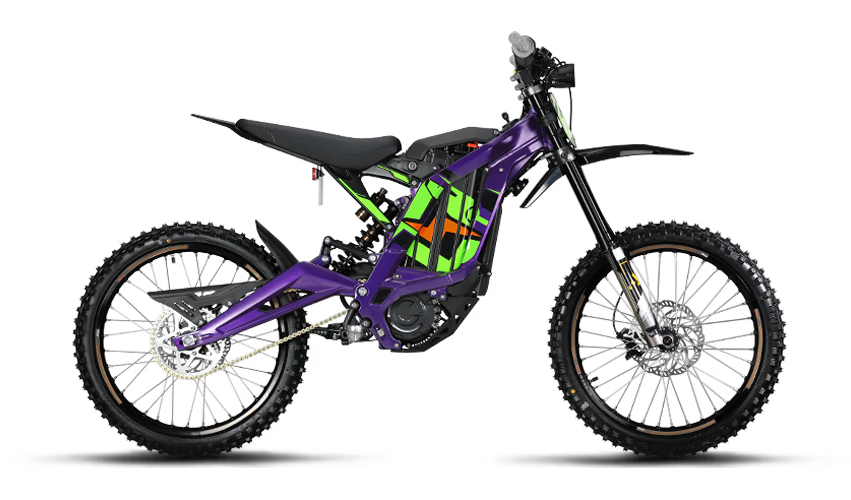 Sur-Ron Light Bee X The bike that defined the category. 8 kW peak, 60V 40Ah.
 - Sur-Ron Storm Bee Liquid-cooled, 22.5 kW peak, 104V. Full-size motocross.
-
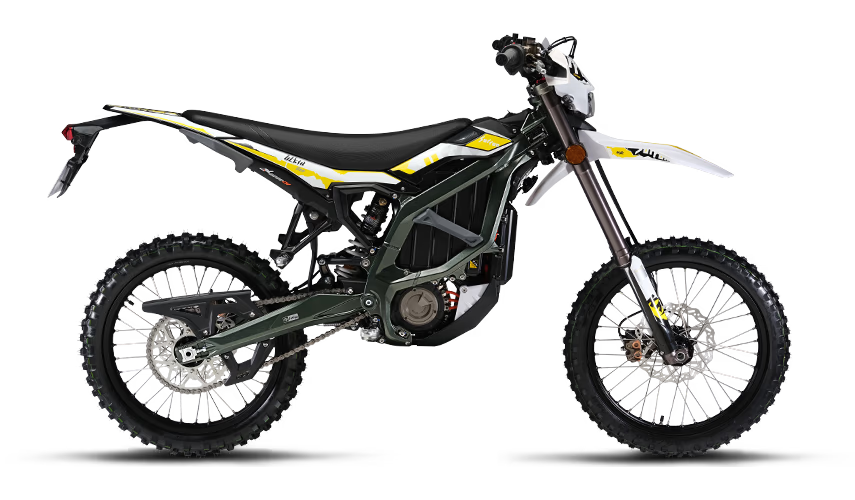 Sur-Ron Ultra Bee Full-size chassis, 74V 55Ah, 440 N·m at the wheel.